Kedarnath Temple 2026:
Complete Guide — Opening Date, Trek, Darshan & Tips
Everything you need to plan your Baba Kedarnath darshan in 2026, opening date, daily timings, aarti schedule, 16 km trek details, helicopter booking, registration, and live darshan online.
✦ Updated April 2026 · Kapat Opens April 22
There is a rock behind the Kedarnath Temple. An enormous, unmovable slab of stone, called Bheem Shila, that stood firm when the 2013 floods came roaring down from the Chorabari glacier and swept everything in their path. Trees, bridges, guest houses, pathways, everything went. But the temple stood. And the rock behind it held.
Pilgrims who visit Kedarnath today touch that rock with trembling hands. Not just because it saved the temple. But because it said something they needed to hear: that some things cannot be moved. That Baba Kedarnath cannot be washed away. That the Jyotirlinga that has been worshipped in these mountains since before recorded history will still be here tomorrow morning when the first light touches the Himalayan peaks and a priest begins the Maha Abhishek at 4 AM in the cold, sacred silence.
In 2026, the Kedarnath Temple kapats (doors) open on April 22 at 8:00 AM, announced officially on Mahashivratri by the Badrinath-Kedarnath Temple Committee (BKTC) at the winter seat in Ukhimath. The yatra season runs until November 11, 2026 (Bhai Dooj).
Whether you plan to trek all 16 km, take the helicopter, or bring elderly parents for whom a helicopter darshan is the only option, this guide has everything you need. Timings, aarti schedule, trek waypoints, packing list, registration, mobile-free zone rules, helicopter booking, and how to watch live darshan on LiveDarshanHub when the mountain is out of reach. Har Har Mahadev. 🙏
Kedarnath Temple — At a Glance (2026)
The Story of Kedarnath — Why This Temple Stands Where It Stands
The Kedarnath Temple is not simply old. It is ancient in a way that makes ordinary history feel recent. The present structure was built in the 8th century CE by Adi Shankaracharya, the great philosopher-saint who systematized Advaita Vedanta and restored the four corner dhams of India. But Shankaracharya did not found Kedarnath. He rebuilt it. The original shrine, tradition holds, was established by the Pandavas themselves after the Kurukshetra war, as an act of penance for the bloodshed they had caused.
The Jyotirlinga here is not in the form of a typical Shivalinga. It is a naturally occurring trikona (triangular) rock formation, a swayambhu manifestation. According to the Mahabharata, Lord Shiva, wishing to evade the Pandavas who sought his forgiveness, transformed himself into a bull and plunged into the earth at this spot. The triangular hump of the bull, Kedara, which means field in Sanskrit, remained above the surface. This is what devotees venerate as the Kedarnath Jyotirlinga. The other parts of Shiva’s bull-form appeared at four other locations in Uttarakhand, together forming the sacred Panch Kedar circuit.
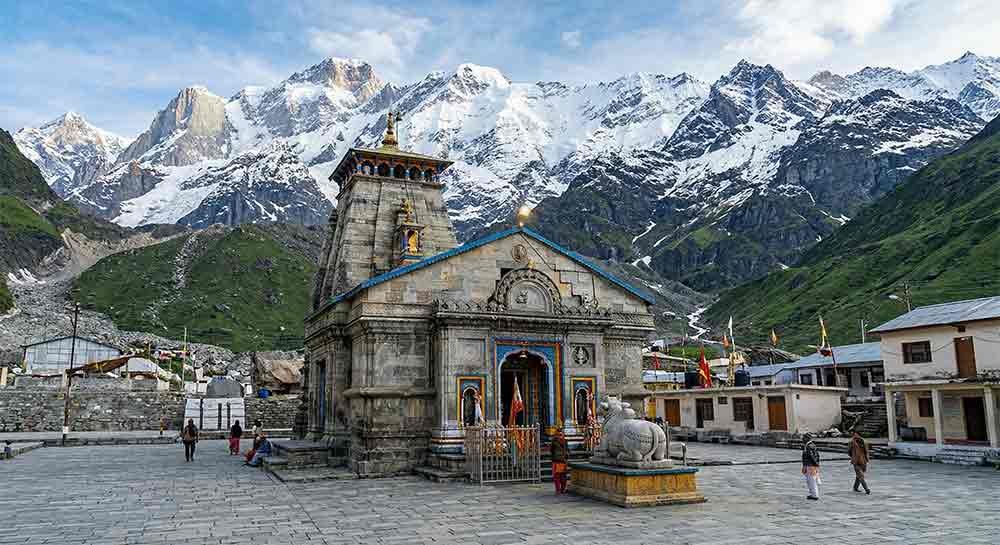
The temple structure itself is breathtaking in its austerity. Built of enormous, evenly cut grey stone slabs, scholars still wonder how such massive stones were transported to 3,583 metres, the temple has survived centuries of Himalayan winters, avalanches, and the 2013 flood. It has no ornamentation, no gilded exterior. Just stone, silence, and the overwhelming presence of something very old and very real.
And then there is Bheem Shila, the rock that protected the temple during the 2013 catastrophe. Many pilgrims, when they first see it standing solid behind the temple, break down. It is not superstition. It is the visceral, physical proof of a faith that mountains themselves seem to honour.
Baba Kedarnath has been watching over these mountains since before memory began. LiveDarshanHub streams the daily darshan and aartis from Kedarnath live, so you can connect with this ancient energy from wherever you are right now.
🔴 Watch Kedarnath Live Darshan — LiveDarshanHub →The Kapat Opening 2026 — The Panchmukhi Doli Yatra
One of the most moving events on the entire Kedarnath calendar is not the darshan itself, it is the days leading up to it. The Panchmukhi Doli (the ceremonial five-faced palanquin of Lord Kedarnath) begins its journey from Omkareshwar Temple in Ukhimath, where the deity resides during the six winter months — days before the temple opens. This is not a tourist procession. This is a living tradition, unchanged for generations.
| Day | Doli Journey | Significance |
|---|---|---|
| Day 1 | Omkareshwar Temple, Ukhimath → Vishwanath Temple, Guptkashi | The Doli departs with Vedic chants, drums, and devotional songs. Thousands line the route. Overnight at Guptkashi. |
| Day 2 | Guptkashi → Phata | The procession moves through mountain villages. Overnight at Phata, the helicopter base town. |
| Day 3 | Phata → Gaurikund | The Doli reaches the trek base. Pilgrims and the palanquin begin the ascent together. Overnight at Gaurikund. |
| Day 4 | Gaurikund → Kedarnath (via Jungle Chatti, Bhimbali, Rambada, Lincholi, Rudra Point) | The ascent to the temple itself — the most emotional day of the Doli Yatra. The Doli arrives at Kedarnath Dham. |
| Day 5 — April 22, 2026 | Kedarnath — Kapat Opening at 8:00 AM | Amid Vedic mantras, conch shells, and the collective emotion of thousands of devotees, the doors of Baba Kedarnath open for the new season. This is the moment. |
If you can align your yatra to witness the Kapat opening ceremony — even just the final day at Kedarnath — it is something pilgrims describe as one of the most profound experiences of their lives. The sound of the conch shell echoing across the Himalayan valley at dawn, Baba’s doors opening after six months of silence, the first sight of the Jyotirlinga in morning light — there are no words adequate to what happens in that moment.
The Kedarnath Kapat Opening ceremony is streamed live on LiveDarshanHub every year. Watch the 2026 opening live on April 22 — set your reminder now. It is the most watched moment of our entire Char Dham season stream.
🏔️ Watch Kedarnath Kapat Opening Live — April 22, 2026 →Kedarnath Temple Darshan Timings & Aarti Schedule 2026
The Kedarnath Temple follows a strict daily schedule built around its morning and evening rituals. One crucial thing most pilgrims don’t know before arriving: the temple closes for two hours from 3:00 PM to 5:00 PM every day. Plan your trek timing so you don’t arrive during this window and end up waiting in sub-zero wind.
Also important: Sparsh Darshan — the privilege of actually touching the sacred Shivlinga — is only available in the morning until around 10:00 AM. Before 3:00 PM, you can touch the idol and do Abhishek with ghee. After 5:00 PM darshan reopens but you can only view from a distance — the deity at that point is dressed in an emperor’s costume, magnificent and formal. Both darshans are profound, but they are different experiences.
| Time | Ritual / Darshan | Notes |
|---|---|---|
| 4:00 AM | 🌙 Maha Abhishek (Kakad Aarti) — first and most sacred ritual; Shivlinga bathed with milk, ghee, honey, Ganga water, Panchamrit, with full Rudram chanting | Pre-booked tickets required. Limited devotees. The most spiritually immersive experience at Kedarnath. |
| 6:00 AM – 10:00 AM | Sparsh Darshan (Touch Darshan) — you can touch the Shivlinga and perform Abhishek with ghee | First-come; arrive by 5:30 AM to be near the front of the queue. This window closes around 10 AM. |
| 6:00 AM – 3:00 PM | General Darshan (Morning Session) | Free entry. Queue time varies from 30 min (off-season) to 4+ hours (peak May–June). |
| 3:00 PM – 5:00 PM | ⏸️ Temple Closed — afternoon recess for rituals & temple preparation | No darshan of any kind. Plan your trek to arrive well before 3 PM if possible. |
| 5:00 PM – 7:00 PM | General Darshan (Evening Session) — deity in Emperor’s costume; visible darshan only, no touch | Often shorter queues. The golden evening light on the temple in this hour is extraordinary. |
| 6:30 PM – 7:00 PM | 🌟 Shayan Aarti — Lord Shiva is prepared for rest; lamps lit, devotional songs sung; deeply intimate closing ritual | Free entry. One of the most moving moments of the entire temple day. The silence after the aarti is unlike anything else. |
| 7:30 PM – 9:00 PM | Night Darshan (on selected days) | Available on special occasions and festivals. Check BKTC announcements. |
Special Sevas — Rudrabhishek & Panchamrit Puja
The Maha Abhishek at 4 AM at Kedarnath — that hour when the entire mountain world is dark and cold and only the mantra and the lamp are alive — is streamed live on LiveDarshanHub during the yatra season. You don’t have to wait for next year’s trip to experience it.
🌙 Watch Kedarnath Maha Abhishek Live — LiveDarshanHub →How to Reach Kedarnath in 2026
Reaching Kedarnath is a multi-stage journey by design. There is no single direct route — and perhaps that’s appropriate. The approach to Baba’s home is meant to require some effort. Here’s how to navigate it:
By Air
Jolly Grant Airport, Dehradun (DED) — nearest airport, ~238–255 km from Gaurikund. Direct flights from Delhi, Mumbai, Bengaluru. From the airport, hire a taxi to Rishikesh or Haridwar and continue by road.
By Train
Haridwar Junction (HW) — ~206 km from Gaurikund (best connected). Rishikesh (RKSH) — ~216 km. From Tatanagar / Jamshedpur, book trains to Haridwar via Allahabad or Patna. Book 60 days in advance for May–June season.
By Road to Sonprayag
Drive or take a bus from Haridwar/Rishikesh → Devprayag → Rudraprayag → Agastmuni → Guptkashi → Phata → Sonprayag (~220 km from Haridwar). All private vehicles stop at Sonprayag. From there, take government shuttle jeeps to Gaurikund (5 km).
By Helicopter
Helipads at Phata, Sirsi, and Guptkashi. ~10 min flight to Kedarnath base. Book via IRCTC HeliYatra portal (irctc.co.in) — the official, only authorized platform. Fares: ₹6,000–₹14,000 per person one way. Book at least 30–60 days in advance.
The 16 km Kedarnath Trek — A Pilgrim’s Honest Guide
Let me be honest with you about the Kedarnath trek: it is not easy. Starting at Gaurikund at around 1,980 metres and ascending to 3,583 metres over 16 kilometres, you are gaining nearly 1,600 metres of altitude through a mountain path that can be cold, misty, steep in stretches, and physically demanding. But here’s what no guidebook can fully convey: it is also one of the most spiritually and visually extraordinary walks on earth.
The Mandakini river roars below you for much of the route. The air smells of pine and cold stone. Himalayan peaks reveal themselves at every turn. And there is a particular feeling — of walking with hundreds of fellow devotees, all chanting Jai Baba Kedarnath, all climbing toward the same ancient presence — that does something to your ordinary sense of self that you cannot manufacture elsewhere.
Trek Waypoints — Gaurikund to Kedarnath
Gaurikund (1,982 m) — Start
Trek base. Hot spring here — many pilgrims take a dip before beginning. Government shuttle jeeps arrive here. Ponies, palanquins, and pitthu porters available. Register your Yatra pass at the checkpoint before proceeding.
Jungle Chatti (2,600 m) — 6 km
First major resting point. Forest cover, small tea stalls, basic food. The steepest section of the trek is largely done by this point. A psychological milestone — if you’ve reached Jungle Chatti, you’ll finish the trek.
Bhimbali (3,100 m) — 10 km
Named after Bheem of the Pandavas who is said to have rested here. GMVN canteen and rest area. The air starts to thin noticeably. Go slow here. Hot meals available. Roughly two more hours to the temple from this point.
Lincholi (3,380 m) — 13 km
The valley opens up dramatically. On clear days you begin to see the temple’s surroundings. The famous Bheem Pul area is nearby. Many pilgrims feel a second wind here — the proximity of Baba’s abode does something physical to tired legs.
Rudra Point (3,550 m) — 15 km
Helicopter landing zone. Pilgrims arriving by helicopter disembark here. Just 1 km from the temple. At this altitude, take it very slowly. The cold is real and sudden — put on your jacket before you need it.
Kedarnath Temple (3,583 m) — 16 km
You’ve arrived. The stone temple rises before you, the Bheem Shila behind it, snow-capped peaks all around. The first glimpse of Baba’s flag (dhwaja) atop the temple from 1.5 km away will likely make you forget every aching muscle you have.
Trek Options — Which Mode Is Right for You?
| Mode | Cost (Approx.) | Time | Best For |
|---|---|---|---|
| On foot (trek) | Free (only your energy) | 6–10 hours one way | Healthy adults; the most spiritually complete experience |
| Mule / Pony | ₹2,300–₹3,500 one way | 4–6 hours | Those who can’t walk the full distance but want the mountain experience |
| Palki / Dandi (Palanquin) | ₹8,000–₹10,000 one way | 5–7 hours | Elderly, unwell, or those who need full physical support |
| Kandi (Porter carry) | ₹8,800 up & down | 5–7 hours | When palanquin isn’t available; very physically demanding for the porter — tip generously |
| Helicopter | ₹6,000–₹14,000 per person one way | ~10 minutes (flight) | Senior citizens, families with health conditions, very tight schedules |
Watching others do the Kedarnath trek on LiveDarshanHub is the next best thing — and for many devotees who’ve done the trek before, rewatching the darshan live brings back everything. Our Kedarnath stream is live throughout the yatra season.
🔴 Watch Kedarnath Live — LiveDarshanHub →Kedarnath Yatra Registration 2026 — Don’t Skip This Step
Registration is not optional, it is not a suggestion, and it is not something you can do at the last minute at the checkpoint. Without your QR-coded e-pass from the official Uttarakhand portal, you will be turned back at Sonprayag — even if you’ve driven 12 hours to get there. This has happened to thousands of unprepared pilgrims every season.
📋 Kedarnath Yatra Registration — Step by Step
- Portal: registrationandtouristcare.uk.gov.in OR Tourist Care Uttarakhand app (Android/iOS) OR WhatsApp “Yatra” to +91-8394833833
- Registration opened: March 6, 2026 | Offline counters: April 15, 2026 (Haridwar, Rishikesh, Sonprayag, Guptkashi)
- Fee: Completely NIL — free registration in 2026. Any website charging for the e-pass is a fraud.
- ID accepted: Aadhaar, Voter ID, Passport, Driving License, PAN Card
- What you get: An e-pass PDF with a unique QR code that is scanned at checkpoints: Sonprayag, Gaurikund, and at the temple itself
- Medical check: Blood pressure and oxygen level checks are conducted at Guptkashi and Sonprayag medical camps. Carry a doctor’s fitness certificate if you have any pre-existing condition. Senior citizens (65+) require additional medical clearance.
- Print multiple copies and keep a screenshot — phone batteries die in the cold. At checkpoints, you may be asked for either format.
Packing List & Safety Tips — What Kedarnath Actually Needs from You
🎒 What to Pack for Kedarnath 2026
- Thermal innerwear (top and bottom): Non-negotiable. Nights at Kedarnath drop to 0°C to -3°C even in May. Without thermals, you will not sleep.
- Fleece jacket + waterproof outer shell: Layer system works best. The temperature drops 5–10°C every 1,000 metres of altitude gain. What felt warm at Gaurikund will feel cold at Bhimbali and freezing at the temple.
- Good trekking shoes with ankle support: The trail is rocky, uneven, and can be wet and slippery in patches. No sandals, no casual sneakers. Invest in proper footwear.
- Trekking pole / walking stick: Rented at Gaurikund for ₹50–100 if you don’t own one. Saves your knees significantly on the descent, which is where most injuries happen.
- Rain poncho / compact waterproof: Even in non-monsoon months, afternoon clouds can bring sudden showers at altitude. A light waterproof layer weighs almost nothing and protects everything.
- Power bank (20,000 mAh): Charging points are extremely limited above Gaurikund. Cold weather also drains batteries faster than normal. A good power bank is essential for navigation, communication, and emergency contact.
- Altitude sickness medicine (Diamox): Consult your doctor before the trip. Diamox is widely recommended for those ascending rapidly to high altitude. Also carry ORS sachets, paracetamol, antacid, and a basic first aid kit.
- Cash ₹5,000+ in small notes: ATMs exist at Guptkashi but are often empty during peak season. Above Gaurikund, assume cash-only for food, ponies, and porter services.
- Light snacks (dry fruits, energy bars, biscuits): High-altitude exertion burns energy faster. Eating small amounts frequently is much better than eating one large meal before the trek.
- Yatra e-pass (printed + digital): Your single most important document on this journey. Without it, you turn back. Period.
⚡ Safety Rules That Could Save Your Life
- Start before 5 AM. Reach the temple before 2:30 PM. The afternoon window before the 3 PM closure is when altitude exhaustion peaks. Start early, go steady, arrive with time.
- Go slow at altitude. The most common mistake at Kedarnath: people are so excited to reach Baba that they push hard on the trek and arrive with severe altitude headaches. Slow is not weakness. Slow is survival at 3,583 metres.
- Hydrate constantly. Drink 3–4 litres of water per day. Dehydration sets in much faster at high altitude. Avoid alcohol entirely — it worsens altitude sickness dramatically.
- If you feel a severe headache, nausea, or confusion at altitude — descend immediately. These are symptoms of acute mountain sickness (AMS). Do not rest and hope it passes. Descent is the only cure.
- Do not trek after dark. The trail is not lit. The cold becomes dangerous after sunset. If you have not started the descent by 3:30 PM, plan to stay overnight at Kedarnath and descend the next morning.
- Medical camps are available at Jungle Chatti, Bhimbali, and Kedarnath base. SDRF teams are stationed along the route. Don’t hesitate to ask for help.
Preparing for the trek and want to see what the route and temple actually look like? LiveDarshanHub streams Kedarnath live — watch real pilgrims arrive, watch the darshan, watch the aarti. Prepare your heart before your legs.
🙏 Watch Kedarnath Live — Prepare Your Heart First →Watch Kedarnath Live Darshan Online in 2026
There are seasons of life when the Kedarnath yatra is not possible. Illness, age, family responsibilities, financial constraints — life has its own timing. But Baba Kedarnath is known in the tradition as the most compassionate of all Shiva’s forms. Kedara means field — the Lord is the infinite field that holds everything. Including those who cannot physically come to him.
Millions of devotees across India — in flats in Mumbai, in homes in Jamshedpur, in hospital rooms, in offices abroad — have found that watching the 4 AM Maha Abhishek on a phone screen, with folded hands and sincere feeling, carries something real. It is not a substitute for the physical yatra. But it is not nothing, either. In the bhakti tradition, the heart that turns toward Baba is already in Kedarnath.
LiveDarshanHub — Kedarnath Darshan, Every Day, Everywhere
LiveDarshanHub is India’s dedicated Hindu temple live-streaming platform — built so that no devotee anywhere in the world ever misses darshan because of distance, age, or circumstance.
- Live streaming of Kedarnath darshan throughout the yatra season (April–November)
- Maha Abhishek (4:00 AM) and Shayan Aarti (6:30 PM) streamed live daily
- Kapat Opening ceremony (April 22) and Kapat Bandh (November 11) live coverage
- Special Shravan Monday, Mahashivratri, and Navratri extended broadcasts
- HD quality — optimized for Indian mobile data speeds and rural connectivity
- 100% free — no registration, no subscription, ever
- Works on Android, iPhone, tablet, desktop, and smart TV
A practical suggestion: on April 22, 2026 at 8:00 AM — when the kapats of Kedarnath open for the new season — sit quietly, open LiveDarshanHub, and watch. The conch shell will sound. The priests will begin the mantras. And something in you will know that wherever you are, Baba’s door is also open for you.
Mark April 22 in your calendar. Kapat Opening Day. LiveDarshanHub will be streaming live from Kedarnath as the doors open. Share it with your family. Start the season together.
🏠 Visit LiveDarshanHub — India’s Temple Darshan Hub →Sacred Sites Near Kedarnath — Don’t Leave Without Visiting These
Bheem Shila
The rock directly behind the temple that stood firm during the 2013 floods. Now worshipped as a divine protector. Touch it. Feel it. Remember what it means: some things cannot be moved.
Chorabari Glacier (Gandhi Sarovar)
A 2 km walk beyond the temple. The glacial lake from which the 2013 flood waters came. Now a place of solemn reflection and extraordinary beauty — glacial blue water surrounded by permanent snow. Many pilgrims meditate here in silence.
Gaurikund Hot Spring
At the trek base, before you begin. A naturally occurring hot spring sacred to Goddess Gauri (Parvati). Bathing here before the Kedarnath trek is the traditional ritual beginning. Cold morning, warm water, pure intention — the perfect way to start.
Triyuginarayan Temple
~12 km from Gaurikund by road. The temple where Lord Shiva and Goddess Parvati were married, with Lord Vishnu as witness. The sacred fire (havan kund) here is said to have burned since the time of the divine wedding — uninterrupted for three yugas.
Ukhimath (Omkareshwar Temple)
Lord Kedarnath’s winter home in the plains — where the deity resides for six months. Worth visiting in winter or when passing through en route. The small town has a calm, deeply spiritual atmosphere that is completely different from the summer yatra crowds.
Vasuki Tal
A high-altitude glacial lake 8 km from Kedarnath. A challenging additional trek for those with extra days and very good fitness. At 4,135 metres, the views of the Kedarnath and Chaukhamba peaks from here are among the most spectacular in all of Uttarakhand.
LiveDarshanHub covers sacred sites across the Kedarnath valley and all of Uttarakhand during yatra season. One platform, the complete spiritual geography of the Himalayas.
🛕 Explore All Temple Live Streams — LiveDarshanHub →Frequently Asked Questions — Kedarnath Temple 2026
More questions about the Kedarnath Yatra? Or simply want to feel Baba’s presence right now, before the trip? LiveDarshanHub is live, always open, always streaming. Baba Kedarnath is waiting.
🔴 Watch Kedarnath Live Now — LiveDarshanHub →Closing Blessing — Har Har Mahadev 🙏
There is a moment on the Kedarnath trek — usually around Lincholi, 13 km in — when you first see the golden flag (dhwaja) fluttering above the stone temple from a distance. And everything changes. The tired legs forget their tiredness. The thin air doesn’t feel quite so thin. People who’ve been mostly quiet for hours suddenly begin chanting without deciding to. Jai Baba Kedarnath. Har Har Mahadev.
That moment is what the entire 16-kilometre climb is for. And it cannot be separated from the effort that precedes it. The tiredness is not an obstacle to the darshan — it is part of the darshan. Because Baba Kedarnath, the Lord of the Field, is also the Lord of endurance, patience, and the kind of faith that doesn’t need proof until it suddenly gets it.
Go in 2026 if you can. Register early. Start early. Pack warm. Carry your trekking pole and your faith in equal measure. And if this is not your year — LiveDarshanHub is here, streaming Baba’s darshan live, every morning of the yatra season. The mountain is always open. The Lord is always awake.
Har Har Mahadev — Watch Kedarnath Live on LiveDarshanHub
LiveDarshanHub streams live darshan from Kedarnath and India’s most sacred temples — Kashi Vishwanath, Tirupati Balaji, Vaishno Devi, Badrinath, Somnath, Shirdi, and hundreds more.
- Kedarnath live — April 22 to November 11, 2026 — daily morning and evening
- Kapat Opening (April 22) and Kapat Bandh (November 11) streamed live
- All five Char Dhams available on one platform
- 100% free — no subscription, no login, ever
- Works on any device anywhere in India or abroad