Char Dham Yatra 2026:
Complete Guide — Dates, Registration, Route & Tips
Everything you need to plan the holiest Himalayan pilgrimage of your life, Yamunotri, Gangotri, Kedarnath & Badrinath. Opening dates, registration steps, trek routes, helicopter options, and live darshan online.
✦ Updated April 2026 · Official Dates Confirmed
Some journeys you plan. And some journeys plan you.
The Char Dham Yatra is that second kind. It begins long before you buy the train ticket or pack your bag. It begins the moment something inside you, quiet, insistent, impossible to fully explain, says: this is the year. And when that call comes from the Himalayas, you listen.
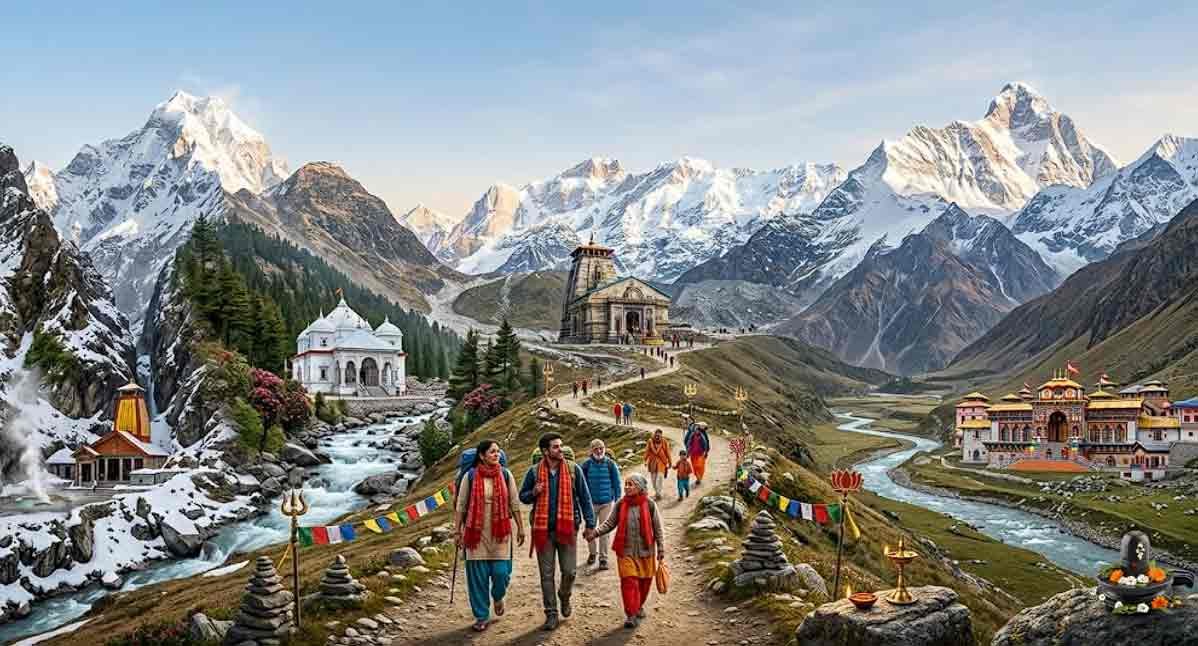
The four sacred shrines of Uttarakhand, Yamunotri, Gangotri, Kedarnath, and Badrinath — sit at altitudes between 3,100 and 3,583 metres in the Garhwal Himalayas. They are not merely temples. They are the four corners of a spiritual world: the source of the Yamuna, the origin of the Ganga, the abode of Lord Shiva, and the home of Lord Vishnu. Together, they form the most complete pilgrimage circuit in all of Hinduism.
In 2026, the yatra season opens on April 19 with Yamunotri and Gangotri, followed by Kedarnath on April 22 and Badrinath on April 23. Registration is open, the mountains are ready, and if you are reading thi, perhaps Baba is calling you too.
This guide covers everything: opening dates, mandatory registration steps, route and itinerary, individual dham details, trek vs helicopter options, packing tips, best time to go, and how to watch live darshan on LiveDarshanHub when the physical journey isn’t possible. Jai Badri Vishal. Har Har Mahadev. Jai Mata Di. Jai Shri Hari. 🙏
Char Dham Yatra 2026 — At a Glance
The Four Dhams, Who Are You Going to Meet?
Before logistics, before booking, before packing, it helps to truly understand the spiritual geography you are entering. Each of the four dhams is a completely distinct world with its own energy, mythology, and way of touching the heart.
Yamunotri — First Dham
Altitude: 3,293 m | Opens: April 19, 2026
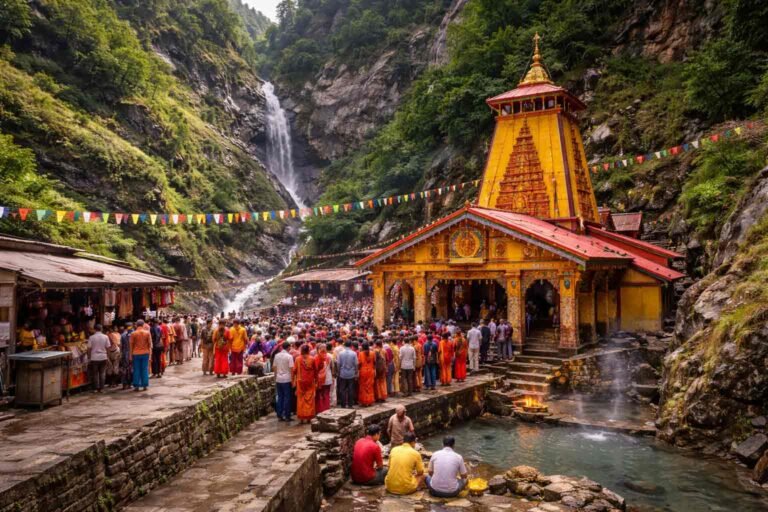
The source of the Yamuna river, dedicated to Goddess Yamuna. The first stop on the circuit, and in many ways the gentlest. The 6 km trek from Janki Chatti passes beside the roaring river. The temple’s highlight is the Surya Kund hot spring where pilgrims cook rice as prasad. Utterly serene. The perfect opening note for the yatra.
Gangotri — Second Dham
Altitude: 3,048 m | Opens: April 19, 2026
The origin point of the Ganga river, dedicated to Goddess Ganga. Unlike the others, Gangotri is accessible by road, no mandatory trek. The temple sits above the thundering Bhagirathi river in a spectacular Himalayan gorge. The optional Gaumukh glacier trek (19 km further) is one of the most dramatic walks in India.
Kedarnath — Third Dham
Altitude: 3,583 m | Opens: April 22, 2026
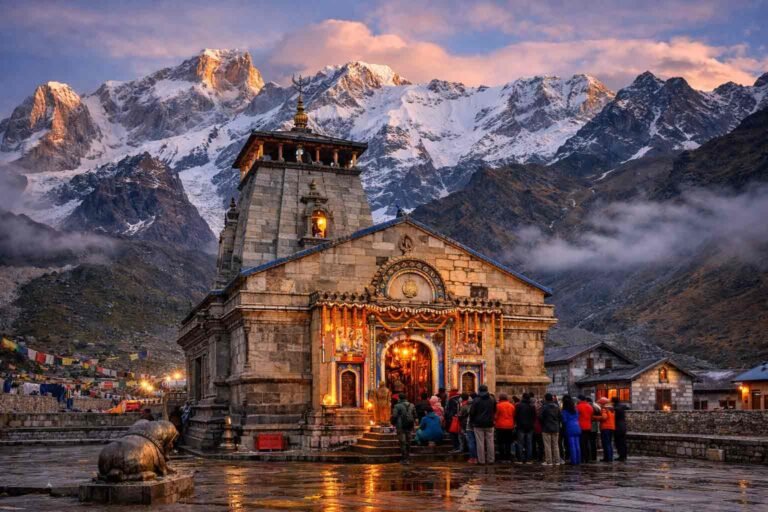
One of the 12 Jyotirlingas. Lord Shiva’s Himalayan home. The most emotionally powerful dham on the circuit. The 16 km trek from Gaurikund (or 10-minute helicopter ride) takes you to a stone temple that has stood since the 8th century, and survived the 2013 Kedarnath floods when the rock behind it protected it. That rock is now called Bheem Shila and is considered divine.
Badrinath — Fourth & Final Dham
Altitude: 3,133 m | Opens: April 23, 2026
Dedicated to Lord Vishnu (Badrinarayan). The grand conclusion of the circuit. The temple sits between the Nar and Narayan mountain peaks beside the Alaknanda river. After darshan, devotees visit Mana Village, the last village before the India–Tibet border. The hot water kund (Tapt Kund) beside the temple is where pilgrims bathe before darshan.
The traditional yatra sequence follows a clockwise direction: Yamunotri → Gangotri → Kedarnath → Badrinath. This is not just geography, it is a spiritual logic. You begin at the source of Yamuna (purification), then Ganga (liberation), then Shiva’s fire (transformation), and conclude with Vishnu’s grace (completion). Each dham does something different to you.
Char Dham Yatra 2026 — Official Opening & Closing Dates
The dates for 2026 have been officially announced by the Char Dham Temple Committee and the Badrinath-Kedarnath Temple Committee (BKTC). The season opens on Akshay Tritiya (April 19) — one of the most auspicious days in the Hindu calendar. Plan your travel around these dates carefully; the first few weeks of May and the post-monsoon window of September–October are the most sought-after periods.
| Dham | Opening Date 2026 | Closing Date 2026 | Deity |
|---|---|---|---|
| 🌊 Yamunotri | April 19, 2026 (Akshay Tritiya) | November 11, 2026 (Yama Dwitiya) | Goddess Yamuna |
| 🌀 Gangotri | April 19, 2026 (Akshay Tritiya) | November 10, 2026 (Diwali) | Goddess Ganga |
| 🔱 Kedarnath | April 22, 2026 | November 11, 2026 (Bhai Dooj) | Lord Shiva (Jyotirlinga) |
| 🏛️ Badrinath | April 23, 2026 | November 13, 2026 (Vijay Dashami) | Lord Vishnu (Badrinarayan) |
Best Time to Do Char Dham Yatra in 2026
May – June
Peak season. Crowds are highest but weather is pleasant (8°C–22°C). Snow on the higher passes creates extraordinary scenery. Book everything 2–3 months in advance. Best for those who can tolerate crowds in exchange for fresh-snow Himalayan views.
July – August
Monsoon. Heavy rain causes landslides and road closures regularly, not recommended for first-timers. However, veteran trekkers report that the waterfalls and lush greenery are extraordinary. Kedarnath helicopter often suspended.
September – October
The sweet spot. Post-monsoon clarity brings dramatic sky views. Significantly fewer crowds. Roads are cleaner. Weather is cool but manageable. This is when experienced pilgrims prefer to go. Navratri energy adds a divine layer to the darshan.
Late April (Opening)
Cool and crisp with some snow remaining near Kedarnath. The opening ceremony of each dham, especially Kedarnath’s Panchmukhi Doli arrival, is an unforgettable spectacle. Roads may still be clearing from winter; check conditions before departing.
Char Dham Yatra 2026 Registration — Mandatory, Free & Non-Negotiable
After the 2013 Kedarnath floods, when nearly 5,000 people lost their lives and one of the biggest challenges was that no one knew exactly how many pilgrims were on the route at any given time, the Uttarakhand government introduced mandatory registration. Today, without your e-pass and QR code, you will be turned back at checkpoints even if you have driven for 12 hours to get there. No registration. No entry. Full stop.
The good news: registration is completely free in 2026 (NIL fees, as officially confirmed), takes less than 15 minutes online, and your e-pass works across all four dhams in a single registration. Over 1.26 lakh pilgrims registered on the very first day, March 6, 2026, which gives you a sense of the demand.
📋 How to Register for Char Dham Yatra 2026 — Step by Step
- Step 1: Visit registrationandtouristcare.uk.gov.in (official govt portal) or download the Tourist Care Uttarakhand app (Android/iOS). You can also WhatsApp “Yatra” to +91-8394833833 for guided registration.
- Step 2: Click “Register” → Choose type: Individual, Family, or Tour Operator.
- Step 3: Fill in full name, age, gender, email, mobile number (for OTP), address, emergency contact details. Select “I am a Doctor” if applicable, this is tracked for medical resource deployment.
- Step 4: Upload a government ID, Aadhaar, Voter ID, Passport, or Driving License. Upload your passport-size photo.
- Step 5: Select your travel dates and the order of dham visits. Add each pilgrim in your group separately.
- Step 6: Submit and agree to the health declaration.
- Step 7: Download your e-pass, a PDF with a unique QR code. Keep a printout AND a screenshot on your phone. At every checkpoint (Dobata, Phata, Sonprayag, Pandukeshwar, etc.), officials will scan this QR code.
📌 Registration — Key Facts for 2026
How to Reach — Getting to the Char Dham Base Points
All Char Dham yatras begin from one of three main gateway cities: Haridwar, Rishikesh, or Dehradun. From these cities, you head into the mountains by road (or helicopter). Here’s how to reach these gateways:
By Air
Jolly Grant Airport, Dehradun (DED), nearest airport. Direct flights from Delhi, Mumbai, Bengaluru, Kolkata, and more. Distance to Haridwar: ~54 km (1.5 hrs). Distance to Rishikesh: ~35 km (1 hr). From the airport, take prepaid taxis to your starting point.
By Train
Haridwar Junction (HW) and Rishikesh (RKSH) are the railheads. Trains from Delhi (~5 hrs), Kolkata (~18 hrs), Mumbai (~22 hrs), Jamshedpur (via Haridwar). Trains like Shatabdi, Mussoorie Express, and Dehradun Express are popular. Book 60 days in advance for May season.
By Bus / Road
UPSRTC and Uttarakhand Roadways buses connect Haridwar and Rishikesh from Delhi (~5.5 hrs), Lucknow (~9 hrs), and other North Indian cities. The Char Dham All-Weather Road project has significantly improved mountain connectivity in 2026.
By Helicopter (Full Package)
Complete Char Dham Yatra by helicopter starts from Sahastradhara Helipad, Dehradun. 5–6 day packages: ₹2.25–2.5 lakh per person (all-inclusive). Kedarnath helicopter alone from Phata/Sirsi: ₹5,000–8,000 per person. Book 60–90 days in advance for peak season.
Base-to-Dham Driving Distances (from Dehradun)
| Destination (Base) | Distance from Dehradun | Approx Drive Time |
|---|---|---|
| Janki Chatti (Yamunotri base) | ~290 km | 8–9 hours |
| Gangotri Temple | ~268 km | 6–7 hours |
| Gaurikund (Kedarnath base) | ~239 km | 6–7 hours |
| Badrinath Temple | ~314 km | 7–9 hours |
Char Dham Yatra Route & Day-Wise Itinerary 2026
The classic Char Dham Yatra by road takes 10–12 days. Here’s a practical itinerary that gives you enough time at each dham without rushing, while leaving room for the unpredictable, weather delays, road blocks, or simply the urge to sit by the Bhagirathi river for an extra hour.
| Day | Journey | Key Activity |
|---|---|---|
| Day 1 | Delhi / Home → Haridwar / Rishikesh | Arrive, Ganga Aarti at Har Ki Pauri, settle in |
| Day 2 | Haridwar → Barkot (~200 km, 6 hrs) | En route: Kempty Falls, Mussoorie viewpoints. Overnight Barkot. |
| Day 3 | Barkot → Janki Chatti → Yamunotri → Barkot | 6 km trek (or pony/palki). Cook rice prasad in Surya Kund. Temple darshan. Return. |
| Day 4 | Barkot → Uttarkashi (~100 km, 4 hrs) | Rest day or visit Vishwanath Temple in Uttarkashi |
| Day 5 | Uttarkashi → Gangotri (100 km, 4 hrs) | Road drive through Bhagirathi gorge. Temple darshan. Evening at the roaring river. |
| Day 6 | Gangotri → Guptkashi (~220 km, 8–9 hrs) | Long driving day. Overnight at Guptkashi — base for Kedarnath. |
| Day 7 | Guptkashi → Gaurikund → Kedarnath trek | 16 km trek or 10-min helicopter. Arrive Kedarnath, evening darshan or aarti. Overnight at Kedarnath (if weather permits) or base camp. |
| Day 8 | Kedarnath darshan → Return to Guptkashi/Rudraprayag | Morning darshan (quieter than evening). Descend. Overnight Rudraprayag. |
| Day 9 | Rudraprayag → Joshimath (150 km, 5 hrs) | Drive along Alaknanda river. Panch Prayag confluence points en route. Overnight Joshimath. |
| Day 10 | Joshimath → Badrinath (45 km, 2 hrs) | Tapt Kund bath before darshan. Badrinath temple darshan. Visit Mana Village (last village before Tibet border). Return to Joshimath. |
| Day 11 | Joshimath → Rishikesh / Haridwar (250 km, 8 hrs) | Descent drive. Ganga Aarti at Har Ki Pauri in the evening, a perfect close to the circuit. |
| Day 12 | Haridwar → Home | The yatra ends. Something inside you, however, has only just begun. |
Each dham on this circuit is streamed live on LiveDarshanHub during yatra season. Share the live darshan with family members who couldn’t travel, so they can experience every sacred stop alongside you, in real time.
🔴 Share Live Char Dham Darshan with Your Family →Trek or Helicopter? Choosing the Right Way for Your Char Dham Yatra
This is the question every first-timer wrestles with, especially for Kedarnath, where the difference is 16 km of mountain terrain vs. a 10-minute flight. There’s no universally right answer. Here’s an honest breakdown:
Yamunotri: 6 km from Janki Chatti. 2–3 hrs.
Why do it: The trek IS the yatra. Every step on those mountain paths, the river beside you, the prayer flags overhead, the thin cold air at altitude, it changes something in you that a helicopter ride simply cannot. Highly recommended for healthy adults under 60.
Full Char Dham package: ₹2.25–2.5 lakh per person (5–6 days, all-inclusive).
When to choose it: Elderly parents, health conditions, severe time constraints, or families with very young children. Also: if you’ve already done the trek and want a different perspective this time. Book 60–90 days in advance.
This gives you the physical and spiritual depth of the trek where it matters most, without the strain of full road travel for all four dhams. A genuinely good balance for families where members have different fitness levels.
Packing List & Essential Tips for Char Dham Yatra 2026
The Himalayas have a way of teaching you exactly how much you don’t need, and exactly how much you do. Here is the wisdom of experienced pilgrims, distilled into practical guidance that most travel articles gloss over.
🎒 What to Pack — The Honest List
- Warm layers (most important): At Kedarnath and Badrinath, temperatures drop to 0°C–5°C even in May. Pack thermal innerwear, a fleece jacket, a waterproof outer layer, and woollen socks. At Kedarnath, a light down jacket is non-negotiable.
- Trekking shoes with grip: Not sandals, not sneakers. Proper ankle-support trekking shoes for the Yamunotri and Kedarnath treks. Your knees will thank you on the descent.
- Rain gear: A compact waterproof poncho or rain jacket. Mountain weather changes in minutes. If it rains at 3,500 metres and you’re wet, it becomes serious very quickly.
- Altitude sickness medications: Diamox (consult your doctor before carrying). Also pack basic first aid — ORS sachets, paracetamol, antacid, Band-Aids, a crepe bandage.
- Personal medications: Carry more than you think you need. Pharmacies become sparse beyond Rishikesh.
- Power bank (20,000 mAh minimum): Power cuts are common at higher altitudes. Charging points at dharamshalas are limited and often occupied.
- Cash (₹10,000+ in small denominations): ATMs exist at Rishikesh, Uttarkashi, Guptkashi, and Joshimath, but they frequently run out. Beyond these towns, assume cash-only.
- Registered Yatra e-pass (multiple copies): Print two copies and keep a screenshot on your phone. At checkpoints, you may be asked for either.
- Photo ID (original): The same ID used during registration. Carry the original — a photocopy may not be accepted.
- Stick / trekking pole: For Kedarnath and Yamunotri treks. Reduces knee load by 25–30% on the descent, which is where most injuries happen.
⚡ Critical Yatra Safety Tips
- Do not travel at night on mountain roads. This is the single most important safety rule on the entire Char Dham circuit. Stay overnight at intermediate towns rather than pushing on after dark.
- Acclimatize before rushing to altitude. Spend at least one night in Rishikesh or Haridwar (900–350 m) and another at Uttarkashi or Guptkashi (1,100–1,300 m) before going to Kedarnath (3,583 m). Acute altitude sickness is a real and serious risk if you ascend too fast.
- Hydrate constantly. High altitude dehydrates faster than you realize. Drink 3–4 litres of water daily. Avoid alcohol at altitude, it accelerates dehydration and worsens altitude sickness.
- Check road conditions daily on Uttarakhand Police and NHIDCL social media before starting each day’s drive.
- Only postpaid mobile SIMs work in Uttarakhand’s remote mountain areas. Prepaid cards may not have network at higher altitudes. Ensure at least one group member has a postpaid connection.
- Seniors and those with heart/lung/blood pressure conditions should get a full medical check-up before the yatra and carry a doctor’s fitness certificate. The government mandates additional medical clearance for pilgrims above 65.
Yatra season is starting and the dhams are open. Watch the live opening ceremonies of Kedarnath and Badrinath on LiveDarshanHub, the moment the portals (kapats) are opened each spring is one of the most emotionally powerful live events we stream.
🏔️ Watch Char Dham Opening Ceremonies Live →Watch Char Dham Live Darshan Online in 2026
Not everyone can do the Char Dham Yatra in a single year. Age, health, work, family responsibilities — life has its own timing. But the tradition of Hindu philosophy is clear on this: bhava (the feeling of devotion) reaches the divine even when the body cannot make the physical journey. Many pilgrims who cannot travel find that watching the live darshan on a screen, with genuine feeling and folded hands, is an experience that moves them as deeply as any yatra they’ve physically done.
LiveDarshanHub — All Four Dhams, Live, Free, Every Day
LiveDarshanHub is India’s dedicated Hindu temple live-streaming platform, built specifically so that no devotee, anywhere in the world, ever misses the darshan of their sacred deity due to distance, age, or health.
- Live darshan from Yamunotri, Gangotri, Kedarnath & Badrinath during yatra season
- Opening ceremony (Kapat Utsav) of each dham streamed live
- Special Navratri, Shravan, and Mahashivratri extended broadcasts
- Closing ceremony (Kapat Bandh) coverage, including Kedarnath’s Panchmukhi Doli
- HD quality streams optimized for Indian mobile data and Jio speeds
- 100% free — no registration, no subscription required
- Works on any device: Android, iPhone, tablet, desktop, smart TV
If you are currently doing the yatra and have elderly parents or siblings at home who couldn’t join, share LiveDarshanHub with them. The moment you are at Kedarnath for darshan, they can watch live from home. That shared spiritual experience across distance is something families have found genuinely moving.
The Char Dham yatra is calling, whether you answer it by road, by helicopter, or by screen. LiveDarshanHub is your companion for the entire season. Bookmark us. Begin today.
🏠 Visit LiveDarshanHub — India’s Temple Darshan Hub →Frequently Asked Questions, Char Dham Yatra 2026
Ready to begin your Char Dham Yatra 2026? Start your journey on LiveDarshanHub right now — watch the dhams live, feel the energy, and let that feeling drive you toward the Himalayas when the time is right.
🔴 Begin Your Char Dham Journey — LiveDarshanHub →Closing Blessing — Jai Badri Vishal. Har Har Mahadev. 🙏
The Char Dham Yatra changes you. Not in one dramatic moment, although those happen too. It changes you cumulatively. The silence at Yamunotri’s source. The roar of the Bhagirathi at Gangotri. The way the stone temple at Kedarnath seems impossibly solid against the surrounding ice and snow. And then Badrinath, calm, majestic, the Lord of prosperity watching over you as you complete the circuit and finally exhale.
People return from the Char Dham and struggle to explain what happened. The words are never quite right. But something in their eyes is different. Quieter. Clearer. As if a question that had been nagging them for years was finally answered, not in words, but in the simple, overwhelming experience of standing in those four places at the roof of the world and knowing, deeply and without doubt, that the divine is real and it is present and it is near.
May your Char Dham Yatra 2026 be safe, blessed, and transformative. Register early. Pack warm. Start at dawn. And trust the mountains. They know you are coming.
And for those who cannot travel this year, or who want their family to share every sacred moment of the journey, LiveDarshanHub is here, always streaming, always open. The Himalayas may be far, but the darshan is always close.
Jai Badri Vishal, Watch Char Dham Live on LiveDarshanHub
LiveDarshanHub streams live darshan from all four Char Dham temples and hundreds of India’s most sacred shrines — Kashi Vishwanath, Tirupati Balaji, Vaishno Devi, Shirdi Sai Baba, Somnath, and more.
- All four Char Dhams streamed live during yatra season (April–November)
- Kapat Utsav (opening ceremony) and Kapat Bandh (closing) live coverage
- 100% free, no subscription, no login required
- Works on any device, anywhere in India or abroad
- Hindi & English interface built for Indian devotees