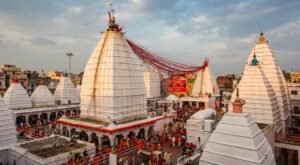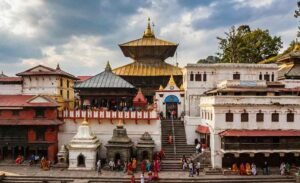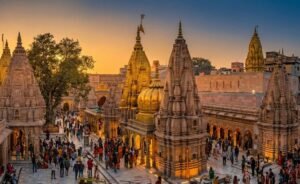
📜 About Nageshwar Jyotirlinga Temple
The God Who Wears the World’s Most Feared Creature as a Necklace
Think about what it means to wear a serpent around your neck.
For most of human history, across almost every culture, the snake has been the symbol of the terrifying unknown. Death without warning. Poison from a creature you never saw coming. The oldest fear in the human nervous system — the snake in the grass, the snake in the dark, the snake that strikes before you can run.
And Shiva wears one around his neck. Not caged. Not dead. Alive, coiled, his hood flared. And Shiva is completely at ease. Not brave in the face of danger — transcendent beyond it. The serpent has no power over the one who has conquered death itself. The most feared poison in the world is powerless against the Lord of all Time.
This is the theology that lives inside the name Nageshwar — Naga (serpent) + Ishwar (Lord) — the Lord of Serpents. The deity who has not merely survived the world’s most dangerous creature but has made it his intimate companion, his ornament, his declaration of fearlessness. And this Jyotirlinga — the tenth — is specifically worshipped for protection against poison, against fear, and against the unseen dangers that can destroy a life without warning.
Come to Nageshwar not just as a pilgrim. Come as someone who is afraid of something. Because the teaching here — encoded in stone, in mythology, in the very name of the deity — is that the most effective response to fear is not to run from it, not to fight it, but to make it your ornament. To wear it. To make it part of you. That is what Shiva does with the serpent. That is what Nageshwar teaches.
Near Dwarka — Two Sacred Worlds in One Journey
One of the most beautiful things about the geography of Nageshwar is where it sits. Just 18 kilometres from Dwarka — the ancient city of Lord Krishna, one of the four Char Dhams, one of the seven Sapta Puris — Nageshwar is close enough that most pilgrims visit both in a single day.
This means that a pilgrimage to Nageshwar is almost always also a pilgrimage to Dwarka. And Dwarka is extraordinary in its own right. The city from which Krishna ruled his kingdom. The city that, according to the Mahabharata, was swallowed by the sea after Krishna’s death — and which archaeologists have actually found submerged offshore, the ruins of what may be the actual ancient city lying under the Arabian Sea. The Dwarkadhish Temple — the great five-storied temple dedicated to Lord Krishna — stands at the water’s edge, and on a good morning, the combination of temple bells, sea wind, and the sight of the temple’s flag whipping in the coastal breeze is one of the most memorable sensory experiences in all of western India.
Pilgrims who come to this corner of Gujarat often combine Nageshwar and Dwarka with visits to Beyt Dwarka (the island where Krishna actually lived), Gopi Talav (the sacred pond where Krishna’s Gopis are believed to have dissolved out of grief), and the coastal temples along the Saurashtra shore. This entire circuit — Nageshwar to Dwarka to Beyt Dwarka — is one of the most spiritually layered day-trips in India.
The Story — A Merchant, a Demon, and a Goddess Who Would Not Stop Praying
The mythology behind Nageshwar Jyotirlinga is less well known than some of the other Jyotirlinga stories — which is part of why it hits harder when you actually hear it. It is a story about ordinary human devotion in the face of extraordinary evil. About what happens when a demon tries to break a prayer — and fails.
According to the Shiva Purana, there was a devoted merchant named Supriya (some texts call him Vaisya Supriya) who was a fervent devotee of Lord Shiva. He traveled by boat, and on one of his voyages, his ship was captured by a powerful demon named Daruka — an arrogant, cruel asura who had received a boon from Goddess Parvati herself, granting him immense power and giving his kingdom (the underworld, called Darukavana) special protection.
Daruka threw Supriya and all the other captured people into his underground prison. In that dark dungeon, with no hope of rescue and no way out, Supriya did the only thing he knew how to do: he began chanting Lord Shiva’s name. Not loudly — softly, steadily, insistently. And he convinced the other prisoners to join him.
Daruka discovered what was happening and was furious. He threatened to kill Supriya if he did not stop. Supriya kept chanting. The entire prison was now vibrating with Shiva’s name. Daruka raised his sword to execute Supriya.
At that exact moment, Lord Shiva — who hears every prayer of every devotee, no matter how dark the place they are praying from — burst forth from the earth as a blazing Jyotirlinga. He destroyed Daruka and his armies in an instant. All the prisoners were freed.
But here is the part of the story that most people miss — the part that makes it human rather than merely mythological: Goddess Parvati was devastated. She had given Daruka his boon. She felt responsible for the suffering Daruka had caused. She went to Shiva and told him her anguish. And Shiva — in one of the most tender moments in all of Jyotirlinga mythology — consoled her. He told her that her compassion, even for a demon, was not wrong. That giving a boon to someone who then misused it was not her fault. That the world always finds its balance again.
Parvati asked Shiva to remain at this spot permanently, so that no devotee who called on him in darkness would ever be left unanswered. Shiva agreed — and the Jyotirlinga of Nageshwar was established. The name Naga — serpent — is also connected to Daruka’s kingdom in some traditions, and the defeat of the serpent-like demon became encoded in the very name of the deity.
The Shiva Statue — 25 Metres of Presence
Before you even enter the Nageshwar Temple complex, something stops you.
It is the statue.
Standing at the entrance to the complex is a 25-metre-tall statue of Lord Shiva in meditation — seated in the classic padmasana pose, eyes half-closed, draped in the skin of a tiger, with the crescent moon in his matted hair and a serene expression on his face that somehow manages to be simultaneously enormous and intimate. This is one of the largest Shiva statues in Gujarat and one of the most striking pieces of religious sculpture in western India.
What makes this statue particularly effective is its setting. It sits against a backdrop of open sky on the Saurashtra coast, with the land flat and wide around it and the sea not far away. On a clear day, with the sky deep blue behind it and the afternoon light catching the stone, the statue seems to float. You stop. You look up. And for a moment — before the queue, before the crowd, before all the logistics of pilgrimage — you are simply standing in front of something very large and very still, and something very large and very still is standing in front of you.
This statue alone is worth the journey from Dwarka.
The Temple — Ancient Stone, Underground Sanctum
The Nageshwar Temple itself is relatively modest in scale compared to some of the other Jyotirlinga temples — but do not mistake modesty for lack of power. The original temple structure is ancient, with the current form developed over centuries of renovation and expansion. The style is broadly Nagara (North Indian), with a shikhara rising above the main sanctum and an assembly hall for pilgrims.
The most distinctive feature of the Nageshwar Temple is the location of the Jyotirlinga: the main sanctum is partially underground (Bhugrihagriha) — you descend a few steps into a lower chamber to stand before the linga. This below-ground placement is unusual among Jyotirlinga temples and gives the sanctum an atmosphere of extraordinary intimacy and density. The ceiling is low. The lamp flames flicker in the enclosed space. The fragrance of incense, milk from the abhishek, and bel leaves is concentrated and overwhelming in the best possible way.
The Nageshwar Linga is a smooth, black stone linga facing south — like the Mahakaleshwar at Ujjain. The south-facing aspect connects it to the direction of Yama, the god of death, reinforcing Nageshwar’s role as the deity who conquers the ultimate fear: death itself and the poisons that cause it.
Outside the main sanctum, the complex includes a beautiful Parvati Temple, a shrine to Nandi directly facing the sanctum, and the large open courtyard where pilgrims gather, sit, and absorb the atmosphere of this coastal sacred space.
The Beach Nearby — Because the Sea Always Has Something to Say
One of the least expected gifts of the Nageshwar pilgrimage is what lies just beyond the temple complex: the coastline of the Saurashtra peninsula, raw and unpolished, with no tourist development to soften it.
After your darshan at Nageshwar, walk toward the sea. Okha Beach and the coastal road toward Dwarka offer stretches of stony, windswept shore where the Arabian Sea comes in hard and flat and loud, and where you can sit for a while with nothing between you and the horizon. After the enclosed, incense-heavy intensity of the temple, this open space feels necessary — a kind of clearing, a breathing out.
The coast near Dwarka and Nageshwar has a quality that is hard to name. It is not beautiful in the way that Goa or Kerala are beautiful. It is more austere than that. The light is harsh, the land is flat, the sea is grey-green and serious. But there is a power here — the same power that made ancient sailors and ancient kings choose this coast for their sacred cities and their kingdoms. Something about the combination of sea, sky, and sacred stone that has drawn human beings to this corner of the world for thousands of years.
Aarti & Daily Rituals
The rituals at Nageshwar Temple follow the traditional Shaiva schedule, performed by the temple’s hereditary priests:
- Mangala Aarti (Pre-dawn): 5:30 AM — The earliest aarti of the day, performed in the dim underground sanctum as the coastal dawn begins to light the horizon outside. The contrast between the dark, enclosed sanctum and the growing light outside creates an atmosphere you will not forget.
- Panchamrit Abhishek: 6:30 AM — The Shivalinga is bathed with milk, curd, honey, ghee, and Gangajal. Pilgrims who arrive early can watch this ritual from just outside the sanctum.
- Rudrabhishek: Throughout the morning — Pilgrims can book special Rudrabhishek sessions, during which Vedic priests chant the Rudrashtadhyayi while performing the sacred bathing of the linga.
- Madhyanha Aarti: 12:00 PM — Midday aarti and bhog offering to the deity.
- Sandhya Aarti: 7:00 PM — The evening aarti, when the coastal wind comes in strongest, the lamps flame sideways, and the sound of bells and conches mixes with the sound of the sea. One of the most atmospheric aartis among all 12 Jyotirlingas.
- Shayan Aarti: 9:00 PM — Final night aarti. The deity is dressed and adorned before rest.
Major Festivals
- Maha Shivaratri: The most sacred night — all-night puja and abhishek; pilgrims from across Gujarat arrive; the combination of the coastal setting and the Shivaratri atmosphere is particularly powerful at Nageshwar
- Shravan Month: Daily special pujas and abhishek every Monday; significant influx of pilgrims throughout the month
- Nag Panchami: Perhaps the most distinctive festival at Nageshwar — since the temple is dedicated to the Lord of Serpents, Nag Panchami is celebrated with extraordinary devotion here. Serpent images are worshipped, milk is offered, and the connection between Shiva and the Naga tradition is honoured in its fullness.
- Kartik Purnima: Sacred bathing in the sea near Dwarka and special darshan at Nageshwar
- Janmashtami: Since Dwarka is Krishna’s city, Janmashtami brings massive crowds to the entire region; Nageshwar benefits from this pilgrimage influx
How to Reach Nageshwar
By Air: The nearest airport is Jamnagar Airport (137 km) or Rajkot Airport (220 km). From both, taxis and buses are available to Dwarka and Nageshwar. Some pilgrims also fly to Ahmedabad (450 km) and make it a road trip through the Saurashtra peninsula.
By Train: Dwarka Railway Station is the most convenient — just 18 km from Nageshwar. Dwarka is on the Rajkot-Okha railway line and is connected to Ahmedabad, Rajkot, and Mumbai. From Dwarka station, autos and taxis reach Nageshwar in 20–25 minutes.
By Road: Nageshwar is 18 km from Dwarka, 157 km from Jamnagar, 220 km from Rajkot, and 450 km from Ahmedabad. The road from Dwarka to Nageshwar runs along the Saurashtra coast — flat, scenic, with the sea visible on your left. Regular buses from Dwarka. State Highway 25 is the main route.
Nearby Attractions
- Dwarka Dwarkadhish Temple (18 km) — One of the Char Dhams, Krishna’s great five-storied temple at the sea’s edge — a must-visit alongside Nageshwar
- Beyt Dwarka Island (30 km) — The island where Krishna actually lived; reached by ferry from Okha port; ancient temples and remarkable atmosphere
- Gopi Talav (20 km) — Sacred pond where Krishna’s Gopis dissolved out of grief; extraordinary devotional atmosphere
- Rukmini Devi Temple, Dwarka — Temple of Krishna’s principal wife Rukmini; striking architecture
- Lighthouse, Dwarka — Spectacular views of the coast and the Gulf of Khambhat
- Somnath Temple (235 km) — First Jyotirlinga; easy overnight trip from Dwarka
- Porbandar (100 km) — Birthplace of Mahatma Gandhi
Why Nageshwar Is the Jyotirlinga for Those Carrying Fear
Every Jyotirlinga has its specific grace. Kedarnath humbles you. Kashi Vishwanath overwhelms you. Somnath fills you with a sense of eternity. But Nageshwar does something more specific and perhaps more personally useful than any of them.
Nageshwar addresses fear directly.
The serpent around Shiva’s neck at Nageshwar is not just mythological imagery. It is a message. It says: whatever you are most afraid of — whatever the snake in your life is, whatever the poison that is slowly corroding your courage or your peace or your relationships — it can be transformed. Not destroyed. Not removed. Transformed. Made into something you carry rather than something that carries you.
The merchant Supriya in the darkness of Daruka’s prison did not fight. He did not plan an escape. He did not bargain or beg or negotiate. He simply kept chanting. In the darkest place, with no hope, with a sword over his head — he kept saying the name of God. And the earth opened.
That is Nageshwar’s teaching. That is what this coastal temple at the edge of the Saurashtra sea has been saying for thousands of years to the fishermen and the merchants and the kings and the ordinary pilgrims who have stood before its underground sanctum with their hearts full of fear.
Keep saying the name. The earth will open.
It always does.
🗿 Temple Murti / Statue
नागेश्वर ज्योतिर्लिंग — सर्पों के स्वामी, द्वारका, गुजरात
Darshan & Aarti Timings
🚪 Darshan Timings
🪔 Aarti Schedule
⭐ Best Time to Visit
⚠️ Timings may change on festivals, special occasions, or during temple renovation. Please verify with the temple before visiting.
Visitor Information
🗺️ Location & How to Reach
amnagar Airport (137 km) | Rajkot Airport (220 km)
Dwarka Railway Station (18 km)
Dwarka Bus Stand (18 km) | Local autos to Nageshwar