Registration start for Char Dham Yatra (Kedarnath, Badrinath, Gangotri, Yamunotri)
Book A trip NowHoli Festival: Meaning, Spiritual Significance, Rituals, and How It Is Celebrated Across India
Holi is one of the most joyful and widely celebrated festivals in India. Known as the Festival of Colors, Holi brings together families, friends, and communities in a spirit of happiness, forgiveness, devotion, and renewal. But beyond the vibrant colors and festive gatherings, Holi carries deep spiritual meaning rooted in Hindu tradition.
For devotees, Holi is not only a celebration of spring but also a reminder of the victory of faith over ego, good over evil, and divine love over negativity. From the sacred fire of Holika Dahan to the playful celebration of Rangwali Holi, this festival holds rich religious, cultural, and emotional significance.
In this guide, we explore the meaning of Holi, its legends, rituals, spiritual importance, and how it is celebrated across India.
What Is Holi?
Holi is a major Hindu festival celebrated on the full moon day (Purnima) of the month of Phalguna, usually falling in February or March. It marks the arrival of spring, the end of winter, and a time of joy, unity, and new beginnings.
The festival is generally observed over two days:
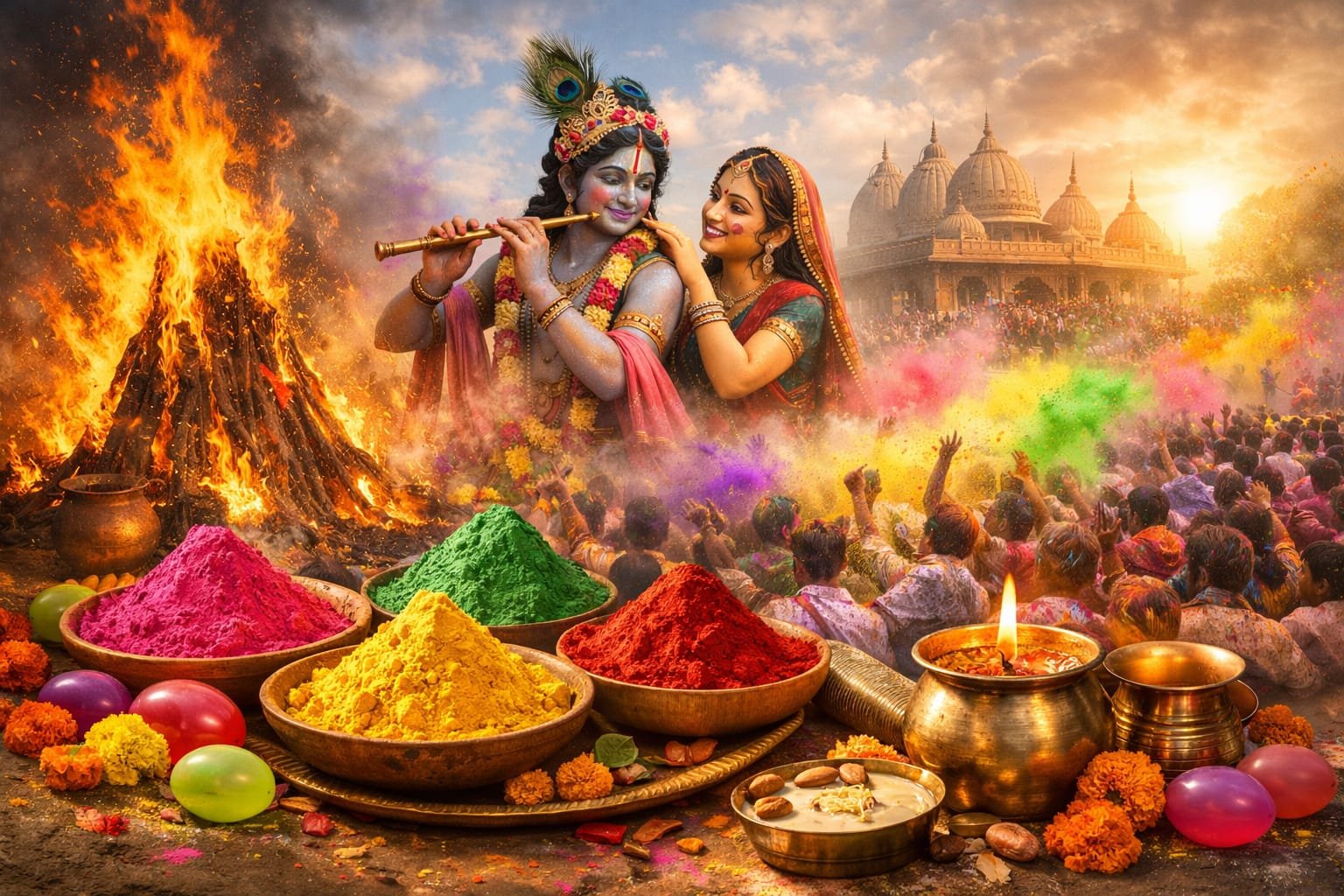
- Holika Dahan – the ritual bonfire performed on the evening before Holi
- Rangwali Holi – the colorful celebration with gulal, music, sweets, and festive gatherings
In many regions, Holi is also connected with the divine love of Radha and Lord Krishna, especially in places such as Vrindavan, Mathura, Barsana, and Nandgaon.
The Spiritual Meaning of Holi
Holi is not just a social festival. Its deeper meaning is spiritual and transformative. It symbolizes:
- The triumph of devotion over arrogance and cruelty
- The burning away of negativity, anger, ego, and harmful tendencies
- The renewal of life as nature enters a fresh spring season
- Forgiveness and reconciliation through love, laughter, and togetherness
- Divine joy expressed through color, music, and celebration
The festival teaches that just as old bitterness can be symbolically burned in the sacred fire, the heart can also be renewed through faith, humility, and devotion.
The Legend of Prahlad and Holika
One of the most important stories associated with Holi is the legend of Prahlad and Holika. This story explains the spiritual foundation of the festival and why Holika Dahan is performed.
According to Hindu tradition, there was once a powerful demon king named Hiranyakashipu. He became arrogant and demanded that everyone worship him instead of Lord Vishnu. However, his own son, Prahlad, was a devoted follower of Lord Vishnu.
Despite repeated attempts to change Prahlad’s faith, Prahlad remained firm in his devotion. Enraged, Hiranyakashipu planned to kill him. He sought the help of his sister Holika, who had a boon that protected her from fire. Holika sat in a blazing fire with Prahlad on her lap, expecting Prahlad to perish.
But due to Prahlad’s unwavering devotion and divine grace, he was saved, while Holika was destroyed in the flames. This event symbolizes the destruction of evil and the protection of true devotion.
This is why, on the eve of Holi, devotees light bonfires to mark Holika Dahan—a sacred reminder that faith, purity, and righteousness are always protected by the Divine.
Lord Krishna and Holi
Holi is also deeply connected with the playful and loving traditions of Lord Krishna. In the Braj region, especially in Mathura and Vrindavan, Holi is celebrated as an expression of Krishna’s divine joy and his loving pastimes with Radha and the gopis.
According to popular tradition, young Krishna once complained to Mother Yashoda about Radha’s fair complexion and his own dark complexion. In a loving, playful moment, he was encouraged to apply color to Radha’s face. This charming legend is often seen as the origin of the playful use of colors during Holi.
In Vaishnava devotional tradition, Holi becomes a celebration of:
- Divine love
- Joyful devotion
- Playfulness in bhakti
- The sweetness of Radha-Krishna leela
This is why Holi in temple towns is often celebrated with bhajans, flowers, gulal, and kirtan in a deeply devotional atmosphere.
Holika Dahan: The Sacred Fire Ritual
Holika Dahan takes place on the evening before the main Holi celebration. Communities gather to light a bonfire, offer prayers, and perform rituals around the sacred fire.
This ritual symbolizes:
- The destruction of evil and arrogance
- The burning of inner negativity
- The protection of devotees
- The cleansing of mind and heart before a fresh start
Many families pray for peace, health, prosperity, and spiritual strength. In some places, devotees walk around the bonfire as part of the ritual, offer grains or coconuts, and pray for the well-being of their family.
Spiritually, Holika Dahan invites us to reflect: What should we let go of? Anger, resentment, jealousy, ego, and fear are all meant to be symbolically offered into the fire.
Rangwali Holi: The Festival of Colors
The next day is the colorful and lively celebration most people associate with Holi. Friends and families gather to apply gulal (colored powder), throw flower petals or colors, sing, dance, share sweets, and celebrate together.
The colors of Holi carry a joyful symbolic meaning:
- Red – love, energy, and auspiciousness
- Yellow – joy, learning, and positivity
- Green – renewal, balance, and life
- Blue – divine grace and Krishna consciousness
- Pink – affection, kindness, and celebration
Holi dissolves social barriers and reminds people of shared humanity. For one day, status, distance, and differences are softened in the spirit of togetherness and joy.
How Holi Is Celebrated Across India
Holi is celebrated in many different ways across India, each region adding its own local tradition and devotional flavor.
1. Mathura and Vrindavan
These sacred towns are among the most famous places for Holi celebrations. Temples and streets come alive with bhajans, gulal, flower Holi, and Radha-Krishna devotion. The atmosphere is deeply spiritual and joyful.
2. Barsana and Nandgaon
These places are known for Lathmar Holi, a famous traditional celebration linked to the playful legends of Radha and Krishna. It attracts many devotees and visitors every year.
3. West Bengal
In West Bengal, Holi is often celebrated as Dol Jatra or Dol Purnima. Devotees carry idols of Radha and Krishna in decorated processions, accompanied by devotional singing and color.
4. Rajasthan
Rajasthan celebrates Holi with royal traditions, folk performances, and community events. In temple settings, the devotional side of the festival remains central.
5. Gujarat and Maharashtra
Holi is celebrated with enthusiasm through bonfires, community events, colors, music, and festive foods. In many homes, it is also a time for family prayer and blessings.
6. South India
While Holi is generally more prominent in North India, many communities in South India also observe it with prayer, devotion, and localized traditions.
Temple Celebrations During Holi
Many temples celebrate Holi in a more devotional and graceful way. Instead of a loud public gathering, temples may observe the festival with:
- Special darshan arrangements
- Bhajans and kirtan
- Flower Holi
- Offering of gulal to the deity
- Special aarti and prasad distribution
- Decorations in festive colors
Temples dedicated to Radha-Krishna often celebrate Holi with special beauty, where the mood is filled with devotion, sweetness, and divine play.
For devotees who prefer a peaceful and spiritual observance, temple Holi can be a deeply uplifting experience.
Traditional Foods Prepared During Holi
No Indian festival feels complete without festive food, and Holi is no exception. Families prepare a variety of sweets and festive dishes to mark the occasion.
Popular Holi foods include:
- Gujiya – a sweet dumpling filled with khoya and dry fruits
- Malpua – a traditional sweet pancake
- Dahi Bhalla – soft lentil dumplings in curd
- Puran Poli – especially popular in some regions
- Thandai – a festive milk-based drink
- Namkeen and festive snacks shared with family and guests
Sharing food during Holi is part of the joy of community, generosity, and celebration.
How to Celebrate Holi in a Respectful and Spiritual Way
Holi can be celebrated with both joy and dignity. A mindful celebration keeps the spiritual heart of the festival alive.
- Begin the day with prayer and gratitude
- Remember the story of Prahlad and the victory of devotion
- Visit a temple if possible
- Use safe and skin-friendly colors
- Celebrate with consent, respect, and kindness
- Reconnect with family, friends, and community
- Forgive old misunderstandings and begin afresh
- Keep the celebration joyful, clean, and spiritually uplifting
Holi is at its most beautiful when it brings happiness without harming others and when celebration remains rooted in faith, love, and respect.
Why Holi Still Matters Today
In today’s fast-moving world, Holi remains deeply meaningful. It gives people a chance to pause, celebrate, forgive, and reconnect. It reminds us that life should include color, devotion, laughter, and community.
At a deeper level, Holi encourages inner transformation. It asks each of us to let go of what darkens the heart and to welcome a brighter, more compassionate way of living.
That is why Holi continues to inspire millions—not only as a cultural event, but as a spiritual message of hope, faith, and divine joy.
Conclusion
Holi is far more than a festival of colors. It is a sacred celebration of devotion, divine love, renewal, and the victory of truth over falsehood. From the fire of Holika Dahan to the joy of colors, Holi reminds us that the human heart can be purified, healed, and filled with light.
Whether celebrated in a grand temple town, in a family courtyard, or through simple prayer at home, Holi carries the same timeless message: let faith rise, let negativity fall, and let life be colored with love and devotion.
May this Holi bring peace, joy, good health, and divine blessings to you and your family.
Frequently Asked Questions About Holi
Why is Holi called the Festival of Colors?
Holi is called the Festival of Colors because people celebrate by applying colored powder and sharing joyful moments with friends and family. The colors symbolize happiness, love, unity, and the arrival of spring.
What is the spiritual significance of Holi?
Holi symbolizes the victory of good over evil, the power of devotion, the burning of negativity, and the celebration of divine love. It is also a time for forgiveness, renewal, and joyful devotion.
What is Holika Dahan?
Holika Dahan is the sacred bonfire ritual performed on the evening before Holi. It commemorates the story of Prahlad and Holika and symbolizes the destruction of evil and protection of true faith.
How is Holi connected to Lord Krishna?
Holi is associated with Lord Krishna’s playful and loving leelas with Radha and the gopis. In places like Vrindavan and Mathura, Holi is celebrated as an expression of divine love and joyful bhakti.
Can Holi be celebrated in a devotional way?
Yes. Many devotees celebrate Holi through temple visits, prayer, bhajans, flower Holi, special aarti, and respectful family gatherings centered on spiritual joy.
Celebrate Festivals with Devotion on LiveDarshanHub
Explore more festival guides, temple insights, and live darshan updates on LiveDarshanHub. Stay connected to sacred traditions and experience devotion from anywhere.