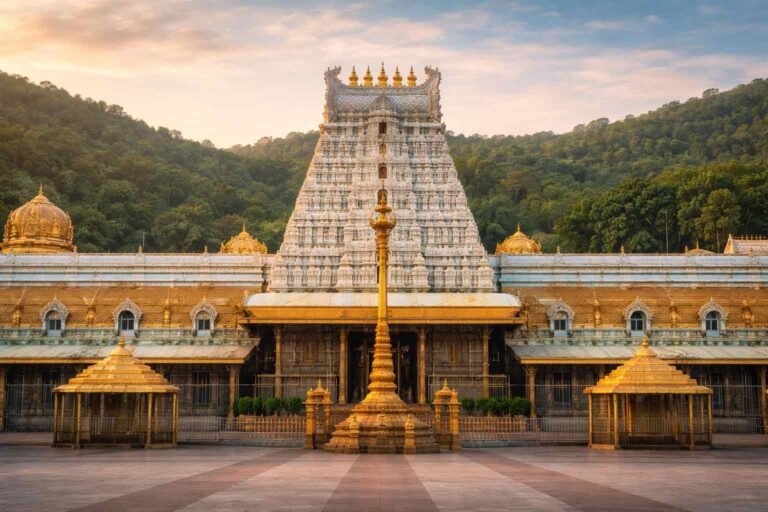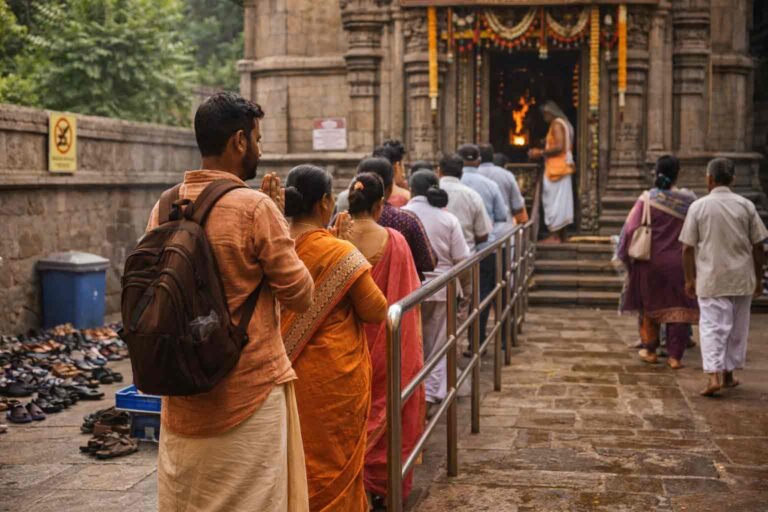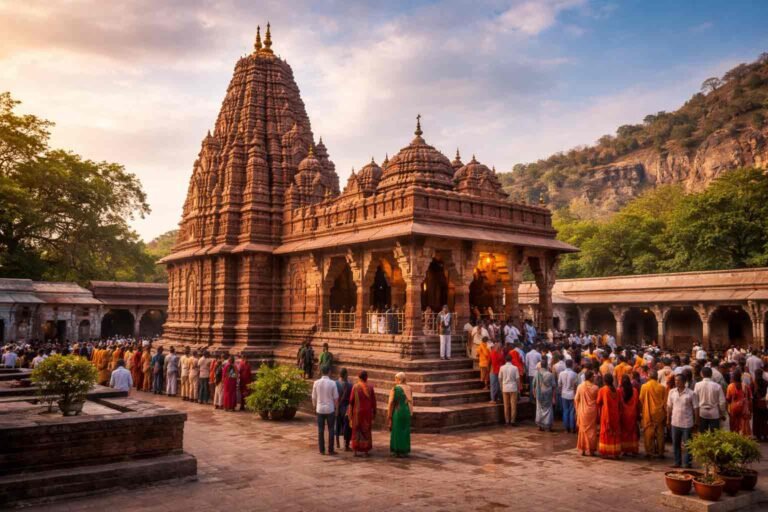
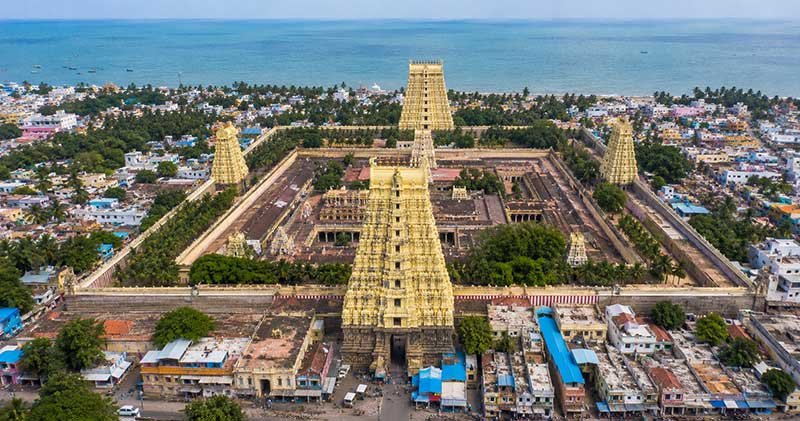
There is a particular feeling that comes over you when you cross the Pamban Bridge for the first time. The sea stretches on both sides, flat and impossibly blue. The island in front of you is small and flat, ringed by the Bay of Bengal on one side and the Gulf of Mannar on the other. And somewhere in the middle of that island is one of the most sacred places in all of Hindu dharma.
Rameswaram is hard to explain to someone who hasn’t been. It is not like Varanasi, which overwhelms you with colour and sound and the sheer weight of its ancient streets. It is not like Tirupati, which is grand and organised and somehow feels like the most efficiently managed miracle in the country. Rameswaram is quieter than both. It is an island that feels like it is still half-listening to the Ramayana. A place where the land itself seems to remember something that happened here a very long time ago.
This is the spot where Lord Rama, returning from Lanka after defeating Ravana, stopped and offered worship to Lord Shiva. He installed a Shiva Lingam here – first made of sand by Sita’s own hands – and prayed for the forgiveness of having killed a Brahmin (Ravana). That Shivalingam, the Ramanathaswamy, is now one of the twelve Jyotirlingas in India. It is also the southernmost point of the Char Dham pilgrimage. It is the place where Ram Setu begins. And it is still, today, one of the most powerful places in the Hindu world.
If you are planning to visit Rameswaram in 2026, this guide covers everything you need to know – how to get there, what the darshan involves, the 22 theerthams ritual, timing advice, what to wear, where to stay, what to eat, and places to see around the island.
Why Rameswaram is Different from Other Pilgrimages
Most pilgrimage towns ask you to come and pray. Rameswaram asks you to come and be washed. The entire ritual structure of visiting this temple begins with water – the sea, and then 22 sacred wells inside the temple complex. Before you even see the main Jyotirlinga, you have been immersed in salt water and then doused with holy water 22 separate times by temple priests. You emerge into the main sanctum with wet clothes, water still in your ears, slightly overwhelmed, and completely stripped of whatever armour you came in with.
There is a reason this is the place Rama chose to pray before returning home. It is a place that takes things off you.
Rameswaram is also unique because it holds significance for Shaivites, Vaishnavites, and every shade of Hindu devotion. Lord Shiva is the presiding deity. But this is also one of the most important sites in the Ramayana. Rama, the avatar of Vishnu, prays to Shiva here. Sita makes the Lingam with her own hands. Hanuman flies to the Himalayas and returns with a Shivalingam that Rama installs alongside the sand one. The temple holds all of this without contradiction – which is exactly what the best sacred sites do.
Rameswaram 2026: Key Temple Information at a Glance
- Temple name: Arulmigu Ramanathaswamy Temple
- Location: Rameswaram, Ramanathapuram district, Tamil Nadu
- Deity: Lord Shiva (as Ramanathaswamy) and Goddess Parvathi (as Parvathasini)
- Type: Jyotirlinga, Char Dham (South)
- Temple timings: 5:00 AM to 1:00 PM and 3:00 PM to 9:00 PM (daily)
- 22 Theertham snana timings: 5:30 AM to 12:30 PM and 3:00 PM to 7:00 PM
- Spatika Lingam darshan: 5:00 AM to 6:00 AM only
- General darshan: Free
- VIP darshan ticket: Rs. 200 per person
- 22 Theertham snana ticket: Rs. 25 per person
- Nearest airport: Madurai International Airport (approx. 175 km)
- Nearest major railway station: Rameswaram Railway Station (direct trains from Chennai, Madurai, Trichy)
- Best time to visit: October to April
How to Reach Rameswaram
Rameswaram sits on Pamban Island, connected to mainland Tamil Nadu by road and rail across the Pamban Bridge. Getting there is part of the experience.
By Train (Recommended)
The train journey to Rameswaram is one of the most scenic rail rides in India. As you cross the Pamban Bridge, the train runs literally over the sea – the water on both sides, the sky enormous. This moment alone is worth the trip. Many people who have been to Rameswaram remember the Pamban Bridge crossing as vividly as the temple itself.
Direct trains run to Rameswaram from:
- Chennai: Several options including the Rameswaram Express (Train No. 16101) and Sethu Express. Journey time: 12 to 14 hours. Overnight trains are ideal as you arrive in the morning, ready for early darshan.
- Madurai: Multiple trains daily, journey time around 3 to 4 hours.
- Trichy (Tiruchirappalli): Direct trains available, journey around 5 to 6 hours.
- Coimbatore: Change at Madurai, total journey around 7 to 8 hours.
Book train tickets on IRCTC as early as possible, especially for travel between October and March. Rameswaram trains fill up fast during festival periods and weekends.
By Air
The nearest airport is Madurai International Airport, about 175 km from Rameswaram. From Madurai airport:
- By taxi: Around Rs. 3,000 to 3,500, journey time 3 to 4 hours.
- By bus: Regular government and private buses from Madurai Bus Stand to Rameswaram. Ticket around Rs. 150 to 250, journey time around 3.5 to 4 hours.
There is a smaller airport at Tuticorin (Thoothukudi), about 130 km from Rameswaram, but flight connections are limited. Most people flying in use Madurai.
By Road
Rameswaram is connected to the mainland via NH-87 through Ramanathapuram. Road distances from major cities:
- From Madurai: Approximately 170 km, around 3 to 3.5 hours.
- From Chennai: Approximately 600 km, around 10 to 11 hours.
- From Trichy: Approximately 300 km, around 5 to 6 hours.
- From Kanyakumari: Approximately 300 km via NH-44 and NH-87, around 5 to 6 hours.
Driving your own vehicle gives you flexibility for visiting places like Dhanushkodi and the coast. The drive across the Pamban Bridge is an experience in itself. Note that all vehicles entering Rameswaram island now go through FASTag-based toll collection at the bridge entry point – ensure your FASTag wallet has sufficient balance.
Government and private buses run regularly from Chennai, Madurai, Trichy, and Coimbatore directly to Rameswaram bus stand.
Local Transport Inside Rameswaram
Once you are in Rameswaram town, the temple is close to most accommodation. Auto-rickshaws are the most convenient way to get around. For visiting Dhanushkodi and other sites on the island, hire a shared or private auto for the day – rates are negotiable, typically Rs. 600 to 1,200 for a full island tour depending on how many stops you include.
The Darshan Experience: What Actually Happens at Ramanathaswamy Temple
This is the section most guides rush through. But if you are going to Rameswaram for the first time, understanding the sequence of the darshan matters a great deal. It is not like walking into a regular temple. The experience here unfolds in three distinct phases, and each one prepares you for the next.
Phase 1: Agni Theertham (Sea Bath)
Before entering the temple, most pilgrims go to Agni Theertham – the beach directly in front of the temple’s East Gopuram. This is where the Bay of Bengal meets the temple’s sacred geography. The waves here are surprisingly gentle for a sea-facing beach. Many people describe it as feeling more like a river ghat than an ocean shore.
You take three dips in the sea here. This is the first act of purification. The sea itself is considered sacred at this point – it is the same water that Lord Rama is said to have prayed to during the building of Ram Setu. After your dip, change into dry clothes (there are changing rooms nearby) and make your way to the temple’s East Gate.
Phase 2: 22 Theerthams (The Sacred Wells Bath)
This is what makes Rameswaram unlike any other temple in India.
Inside the temple complex, there are 22 sacred wells called theerthams. Each well has its own name, its own mythological history, and its own unique quality of water. The waters come from different sources – some from rivers like the Ganga and Yamuna (brought by Hanuman, according to tradition), some from sacred tanks, some connected to episodes in the Ramayana.
You purchase a ticket at the entrance (Rs. 25 per person as of 2026) and are assigned to a bathing group. Temple priests pour water from each of the 22 wells over you in sequence using large brass pots. You walk from well to well, being drenched 22 times, while the priest chants the name of each theertham.
Budget at least 45 minutes to 2 hours for this, depending on how crowded it is. On weekday mornings outside festival season, the process can be completed in about an hour. On weekends and festivals, expect up to 2 hours.
Practical notes for the 22 theerthams:
- Wear clothes you don’t mind getting thoroughly wet – most pilgrims carry a separate set specifically for this.
- The wet clothes after the theertham bath are traditionally left behind (discarded) – bring a fresh change and a small bag for the wet clothes if you prefer to take them with you.
- Do not bring valuables, phones, or bags into the bathing area – leave them in locker facilities available near the entrance.
- The bathing area is gender-separated, with separate queues and sections for men and women.
Phase 3: Main Sanctum Darshan (Ramanathaswamy Jyotirlinga)
After the theertham baths, you proceed to the main sanctum for darshan of the Ramanathaswamy Jyotirlinga. This is the moment the entire journey has been building toward.
There are two Shiva Lingams in the sanctum. The Ramalinga Lingam, made of sand by Goddess Sita, is the main Jyotirlinga. The Vishwalinga, brought by Hanuman from the Himalayas, is worshipped first by tradition – because Lord Rama himself ordained that Hanuman’s lingam should receive the first worship, as a mark of honour for his devotion. Both lingams are within the same sanctum.
Free darshan involves waiting in a queue – typically 1 to 3 hours during peak times. VIP darshan tickets (Rs. 200) reduce the wait to 15 to 30 minutes on most days. If you are visiting with elderly family members or young children, the VIP ticket is worth it.
Spatika Lingam darshan – a separate, rare offering – is only available between 5:00 AM and 6:00 AM. If you want this, plan to arrive at the temple by 4:30 AM.
The Corridors
As you walk through the temple, take a moment to look at the corridors. Ramanathaswamy Temple has the longest temple corridor in India – over 1,200 metres total, with intricately carved pillars lining both sides. The third corridor alone stretches approximately 197 metres. Walking through it is a meditative experience in itself, particularly in the early morning when the light comes through at a low angle and the corridors are quieter.
Temple Timings 2026
- Temple open: 5:00 AM to 1:00 PM and 3:00 PM to 9:00 PM
- Afternoon break: 1:00 PM to 3:00 PM (temple closed)
- 22 Theertham snana: 5:30 AM to 12:30 PM and 3:00 PM to 7:00 PM
- Spatika Lingam darshan: 5:00 AM to 6:00 AM only
- Abhishekam puja: Available from 5:00 AM. Various puja options at different price points (contact temple office for current schedule and booking)
The temple follows a daily schedule of multiple pujas throughout the day. If you want to witness a formal puja rather than just darshan, arrive in time for the morning pujas which begin at 5:00 AM.
Dress Code at Ramanathaswamy Temple
The temple enforces a strict dress code and has become stricter in recent years. This applies to everyone, regardless of where they are from.
Men:
- Dhoti or veshti (lunghi) is preferred and widely available for purchase near the temple.
- Shirts are allowed in the outer areas but must be removed before entering the inner sanctum areas.
- Jeans, shorts, trousers, and Western clothing are not permitted inside the temple.
Women:
- Saree, half-saree, salwar kameez, or other traditional Indian dress.
- Jeans, T-shirts, skirts, shorts, and sleeveless tops are not permitted.
- Leggings worn under a kurta are generally acceptable.
If you arrive in non-traditional clothing, dhotis and sarees are available for rent or purchase right outside the temple gates. Many pilgrims from North India buy a new dhoti and saree in Rameswaram itself, as it is considered auspicious to wear new clothes for a major pilgrimage.
Best Time to Visit Rameswaram
The best months to visit are October through April. The weather is significantly cooler (Rameswaram temperatures range from 18°C to 32°C in this period), which makes the queues and the outdoor portions of the darshan much more manageable.
Avoid May to August if possible. Rameswaram in summer can touch 38°C to 42°C, and the humidity – being a coastal island – makes it feel considerably hotter. Queues in the sun are brutal. The 22 theertham baths do provide some relief, but the overall experience in peak summer is significantly more tiring.
For specific festival timing:
- Maha Shivaratri (February 2026 onwards): One of the biggest festivals at Ramanathaswamy Temple. The temple is spectacularly decorated and there are special pujas and extended darshan. Crowds are enormous – beautiful to witness but plan for long waits.
- Thaipusam (January-February): Another major festival period in Tamil Nadu with significant energy at Rameswaram.
- Aadi Amavasya and other Amavasya days: Rameswaram sees a large influx of pilgrims on Amavasya (new moon) days, as it is considered especially important for pitru tarpan (ancestral offerings).
For the quietest experience: Visit on a weekday in November, December, or early January. Arrive by 4:30 AM. You will be through the full darshan sequence including the 22 theerthams by 9:00 or 10:00 AM with minimal waiting.
How Long to Spend in Rameswaram
A single day is enough for the temple darshan if you come specifically for that. But Rameswaram rewards those who stay longer. Here is a rough guide:
- Day trip from Madurai: Possible but tight. Leave Madurai by 4:00 AM, reach Rameswaram by 7:30 AM, complete darshan by noon, explore a bit, leave by 3:00 PM. This works if you have already planned your Madurai visit separately.
- One night stay: The ideal minimum. Arrive the evening before, do the full morning darshan starting at 5:00 AM, explore Dhanushkodi and other sites in the afternoon, leave the next morning.
- Two nights: Comfortable. Allows you to do morning and evening darshan on separate days, visit all the surrounding sites, and not feel rushed.
Places to Visit Around Rameswaram
The temple is the heart of any Rameswaram trip, but the island has more to offer.
Dhanushkodi
Dhanushkodi is 20 km from Rameswaram town at the tip of the island, and it is one of the most hauntingly beautiful places in South India. This is where the Bay of Bengal and the Gulf of Mannar meet. This is also where Ram Setu – the bridge built by Rama’s army to reach Lanka – begins.
The town of Dhanushkodi was destroyed by a cyclone in 1964 and was never rebuilt. The ruins of the old railway station, church, and post office still stand. The effect is eerie and deeply moving – a ghost town on a sand spit at the edge of the country, with the sea on both sides and Sri Lanka visible on the horizon on a clear day.
The road to Dhanushkodi is mostly unpaved beyond a certain point. Hire a local auto or jeep from Rameswaram for this – they know the route well. Leave early in the morning to get the best light and avoid the afternoon heat.
APJ Abdul Kalam Memorial
Rameswaram was the birthplace of Dr. APJ Abdul Kalam, the scientist and former President of India. His memorial and museum are here, near the house where he grew up. This is not a religious site, but it is an emotional one. The exhibits trace his journey from the son of a boat owner in Rameswaram to the man who led India’s missile programme. Many visitors – particularly families with children – find this as meaningful as any temple on the island.
Gandamadana Parvatham
This small hillock, the highest point on Rameswaram island, is believed to bear the footprints of Lord Rama. It offers panoramic views of the entire island and the surrounding sea. There is a small temple here. Many pilgrims visit as part of the pradakshina (circumambulation) of the sacred island.
Kothandaramaswamy Temple
Located about 12 km from Rameswaram towards Dhanushkodi, this is the temple where, according to tradition, Vibhishana (Ravana’s younger brother) surrendered to Lord Rama and was crowned king of Lanka. The temple is right on the beach, with the sea behind it. It survived the 1964 cyclone when everything around it was destroyed – which devotees take as a sign of its divine protection.
Pamban Bridge (View from the Island)
You crossed it coming in – but once you are on the island, it is worth finding a vantage point to look back at the bridge and the mainland. The old Pamban Bridge (British-era, 1914) runs parallel to the newer road bridge and is one of the most photographed railway bridges in India. Watching a train cross it from the island side, with the water all around, is a very particular kind of beautiful.
Five-Faced Hanuman Temple (Panchamukha Anjaneya Temple)
About 2 km from the main temple, this is one of the very few temples in India where Lord Hanuman is depicted in his five-faced (Panchamukha) form. The idol here is said to be ancient and deeply powerful. Worth including if you have time.
Where to Stay in Rameswaram
Rameswaram has accommodation at all price points, from dharamshalas and budget guesthouses to comfortable mid-range hotels. Most pilgrims stay within walking distance or a short auto ride from the main temple.
- Budget: Temple Trust guesthouses and dharamshalas near the temple offer basic, clean rooms at Rs. 300 to 800 per night. Book in advance during peak season.
- Mid-range: Several hotels in the Rs. 1,000 to 2,500 range are available in the main town area. Hotel Tamil Nadu (TTDC) is a reliable option with decent facilities.
- Comfortable: A few hotels at Rs. 3,000 to 5,000 offer better amenities. Some have sea views.
If you are visiting during festival periods, particularly Maha Shivaratri, book accommodation at least 4 to 6 weeks in advance. Rooms fill up very quickly.
What to Eat in Rameswaram
Rameswaram is a pilgrimage town, so the food is almost entirely vegetarian. Fresh seafood is available but you have to look for it, and it is mostly sold in less central areas.
The local Tamil Nadu vegetarian food here is excellent. Things to eat:
- Pongal: Rice and lentil dish, typically eaten for breakfast. Light, filling, and exactly right before a long morning darshan.
- Idli and sambar: The South Indian classic. Every small restaurant and canteen near the temple serves it. The sambar here tends to be lighter and more fragrant than North Indian versions.
- Coconut-based curries: The coastal Tamil Nadu cuisine uses coconut generously. The rice meals (thali) at local restaurants are generous and very affordable.
- Temple annadhanam (free food): The temple runs an annadhanam (free meal) programme. Pilgrims can partake in the communal prasad meal – this is a meaningful experience in itself and deeply in the spirit of the place.
- Fresh coconut water: Available everywhere along the route. After the sea bath and the 22 theertham baths, a tender coconut is one of the most satisfying things you will ever drink.
Practical Tips for First-Time Visitors
- Arrive early. 4:30 to 5:00 AM is the sweet spot for Rameswaram. The queues are shortest, the light is beautiful, and the atmosphere inside the temple before the crowds arrive is something you will not forget.
- Carry extra clothes. You will need at minimum three sets: one for the sea bath (Agni Theertham), one for during the 22 theertham baths, and one fresh set to wear after for the main darshan. Many pilgrims carry a small bag with all three sets packed separately.
- Leave valuables at your hotel. The temple complex involves water, crowds, and extended walking. Do not carry anything you cannot afford to lose. Most hotels have lockers or safe deposit facilities.
- Footwear storage. You will go barefoot from the moment you reach the temple area. Locker facilities for footwear are available at the temple entrance. Keep your footwear token safe.
- No photography inside the inner sanctum. The outer corridors are generally photographable but check with temple staff. The sanctum itself is a no-photography zone.
- Senior citizens and persons with disabilities: Wheelchair access is available at the temple. Inform temple staff at the entrance and you will be assisted. VIP darshan tickets are strongly recommended for those who cannot stand in long queues.
- Guides are not necessary for the darshan sequence – the queues are well-marked and the process is straightforward. But a local guide can add a lot of depth to the mythological and historical context, particularly for Dhanushkodi. Agree on a price before starting.
- Stay hydrated. The combination of sea water, temple baths, and the heat can leave you more dehydrated than you expect. Drink plenty of water and coconut water throughout the morning.
Rameswaram as Part of a Larger Pilgrimage Circuit
Many pilgrims combine Rameswaram with other nearby sacred sites as part of a larger South India pilgrimage. Common circuits include:
- Rameswaram and Madurai: Meenakshi Amman Temple in Madurai is about 170 km from Rameswaram. A 3 to 4 day trip covering both is very common and deeply satisfying.
- Rameswaram and Kanyakumari: The southernmost tip of India is about 280 km. Combining the two gives you both the Jyotirlinga darshan and the convergence of three seas at Kanyakumari.
- Char Dham (South India version): Some devotees visit Rameswaram as the southern point of a South Indian Char Dham circuit that includes Badrinath, Dwarka, and Puri – completing this is believed to grant moksha.
- Pancha Bhuta Stalas: The five Shiva temples of Tamil Nadu representing the five elements – Rameswaram’s Ramanathaswamy is associated with water. The complete circuit includes Chidambaram (space), Thiruvannamalai (fire), Kanchipuram (earth), and Tiruvanaikaval (water/Rameswaram).
Watch Rameswaram Temple Darshan Live on LiveDarshanHub
Not everyone can make the journey to Rameswaram in person – and even those who can sometimes want to reconnect with the darshan experience from home. LiveDarshanHub streams live darshan from Rameswaram’s Ramanathaswamy Temple and other Jyotirlinga temples across India, so the blessings of this sacred Jyotirlinga reach you wherever you are.
Watch the morning abhishekam, the evening aarti, and special puja broadcasts on festival days – all live, all free, on any device. On days like Maha Shivaratri, when Rameswaram is at its most magnificent, the live stream brings the entire experience into your home.
Frequently Asked Questions
Is Rameswaram safe to visit solo?
Yes, Rameswaram is a very safe destination for solo travellers, including solo women travellers. It is a well-visited pilgrimage town with a large permanent population of pilgrims and support infrastructure. Standard precautions apply – be aware of your belongings in crowds, do not carry valuables to the temple, and pre-book accommodation.
Is bathing in all 22 theerthams compulsory?
It is not strictly compulsory, but it is the heart of the Rameswaram pilgrimage experience. The 22 theertham snana is what distinguishes Rameswaram from every other Jyotirlinga – it is the ritual that the place is built around. Most pilgrims and priests consider it an essential part of the visit. If you have health conditions that prevent immersion in water, inform temple staff and alternatives may be arranged.
Can the full darshan be done in one day?
Yes. If you arrive by 5:00 AM, the full sequence – Agni Theertham sea bath, 22 theertham snana, main sanctum darshan – can be completed by 10:00 or 11:00 AM on a weekday. This leaves the rest of the day for Dhanushkodi, the Abdul Kalam Memorial, and other sites. Most day-trippers from Madurai follow this pattern.
What is the significance of Rameswaram in the Char Dham pilgrimage?
Rameswaram is the southernmost point of the Char Dham pilgrimage circuit – the four sacred sites that Adi Shankaracharya designated as representing the four corners of Bharat: Badrinath (north), Dwarka (west), Puri (east), and Rameswaram (south). Completing all four is considered one of the highest acts of pilgrimage in Hindu tradition, believed to confer moksha.
How far is Ram Setu (Adam’s Bridge) from the temple?
Ram Setu begins at Dhanushkodi, approximately 20 km from the main temple. The chain of shallow limestone shoals extends towards Sri Lanka. You can see the beginning of the underwater formation from the Dhanushkodi shore. The view is particularly clear on days with calm seas.
What is the best way to reach Rameswaram from North India?
By flight to Madurai, then taxi or bus to Rameswaram – this is the fastest option. By train, there are direct trains from major North Indian cities (with a change or connection typically at Chennai) to Rameswaram. The overnight train journey from Chennai to Rameswaram is recommended – you arrive fresh in the morning and can go straight to the temple.
A Closing Thought
Rameswaram does not announce itself. The island is flat and the town is small and the road to the temple is lined with shops selling coconuts and flowers and plastic bags of sacred water. Nothing about the approach prepares you for what you feel when you step inside.
But that is also part of what the place teaches. The sacred does not always announce itself either. It sits quietly in a small island between two seas, waiting for you to get wet and stripped of your daily armour and ready to receive something you did not know you were looking for.
Come early. Bring extra clothes. Go slowly through the corridors. Let the 22 theerthams do what they have been doing for thousands of years.
And if you cannot come in person right now – LiveDarshanHub brings the darshan to wherever you are. 🙏
Har Har Mahadev. Jai Ramanathaswamy.